
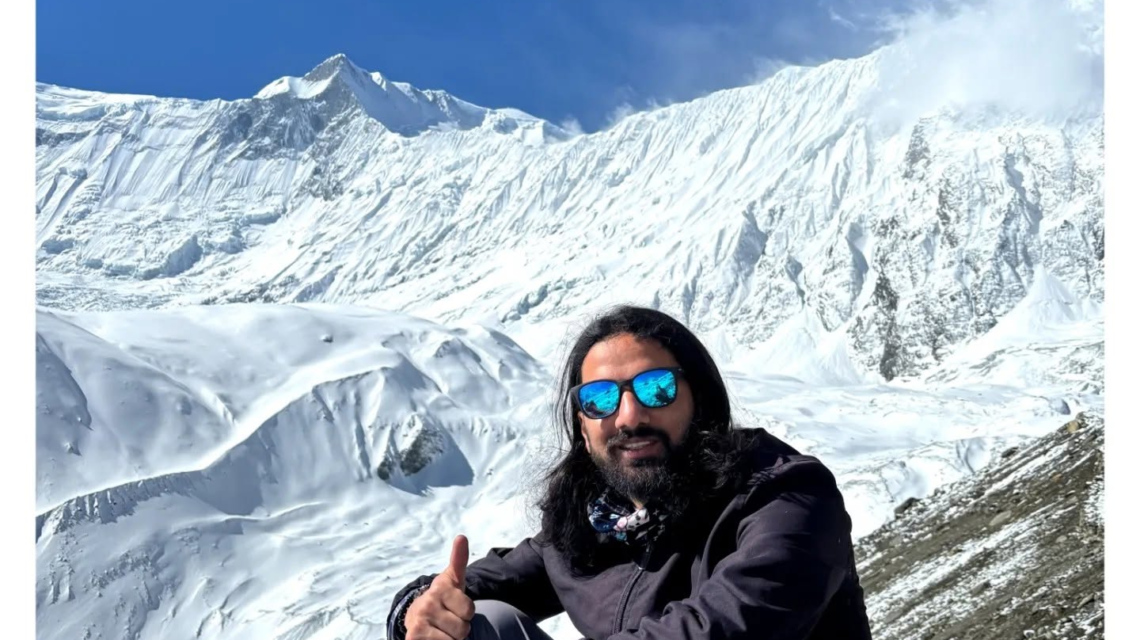
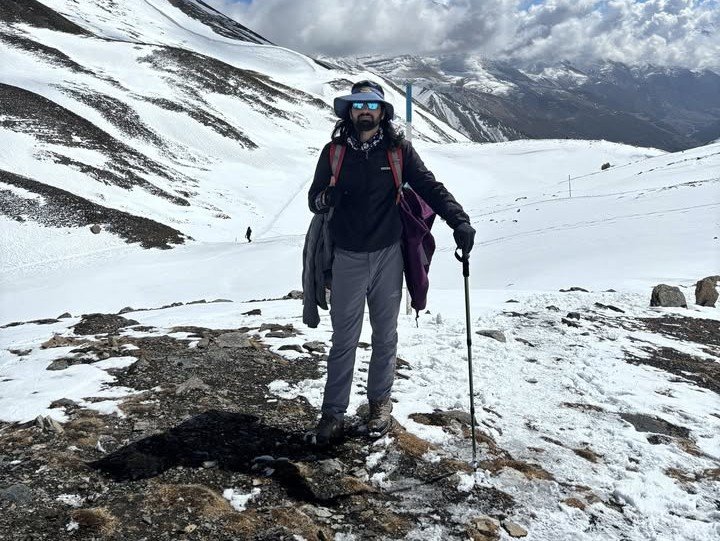
As a child, I looked at the snow-covered Himalayas with a sense of wonder. The mountains seemed endless—symbols of eternity, majesty, and beauty. I could hardly imagine that, years later, those same mountains would become some of the most visible indicators of climate change.
My journey toward understanding glaciers began with rocks.
I graduated with a bachelor’s degree in geology because I was fascinated by the formation of the Earth and its mountains. During my studies and professional work as a geologist, I had the opportunity to travel extensively across Nepal and explore the Himalayas. I spent hundreds of hours studying rocks, geological formations, tunnels, and other features across the mountains.
The more I explored the Himalayas, the more I understood their deep connection with human life. At the same time, my experiences raised new questions. Why do streams flow in particular directions? Why do landslides and rockfalls occur? How do glacial lakes form? Why are climate-related hazards becoming increasingly important? And, perhaps most importantly, what is the connection between geology and glaciers?
These questions eventually led me from geology to glaciology.
Geology helps us understand the history of the Earth, while glaciology provides important insights into how the cryosphere is changing and what those changes could mean for the future. Driven by curiosity and a growing interest in glaciers, I pursued a master’s degree in environmental science with a concentration in glaciology at Kathmandu University.
Today, my work focuses on glaciers, permafrost, and mountain hydrology. I am interested in understanding how these systems interact with the environment and how glaciers function as natural reservoirs that support biodiversity, hydropower, agriculture, and domestic water supplies.
This has helped me understand why the glaciers of the Hindu Kush Himalaya are often described as the “water towers of Asia.”
A Warning from the Himalayas
The outlook for the region’s glaciers, however, is deeply concerning.
Climate change is causing glaciers across the Hindu Kush Himalaya to lose mass and retreat. This has implications far beyond the mountains themselves. The region’s glaciers and snow provide water to hundreds of millions of people downstream, making changes in the cryosphere an important concern for water security, ecosystems, livelihoods, and economies.
For Nepal, the consequences could be particularly significant.
Glacier loss can affect water availability, biodiversity, hydropower generation, agriculture, and mountain communities. At the same time, the formation and expansion of glacial lakes can increase the risk of glacial lake outburst floods (GLOFs), which can threaten downstream settlements, hydropower projects, roads, bridges, and other critical infrastructure.
The consequences are not limited to physical infrastructure. Changes in water availability can also affect the social and cultural lives of communities that have depended on mountain water systems for generations.
Nepal contributes relatively little to global greenhouse gas emissions compared with major industrialized countries, yet it remains highly vulnerable to the impacts of climate change. The rapid changes occurring in the Himalayas illustrate this imbalance clearly: those who contribute least to the problem can face some of its most severe consequences.
The Glacier Challenge Is More Than a Scientific Problem
As I have progressed through my master’s studies, I have increasingly realized that the glacier crisis cannot be addressed through science alone.
Research on glaciers, permafrost, mountain hydrology, and hazards such as GLOFs is essential. We need better data, stronger monitoring systems, and a deeper understanding of how the Himalayan cryosphere is changing. But scientific knowledge must also reach policymakers, local governments, communities, and the wider public.
This makes the glacier issue not only a scientific challenge but also a policy and governance challenge.
There is an urgent need to translate scientific findings into practical policies and strategies. Communities living downstream of glaciers need access to information about potential hazards. Policymakers need reliable scientific evidence to make informed decisions about infrastructure, water management, disaster preparedness, and climate adaptation.
Young scientists have an important role to play in this process.
Scientific knowledge has little impact if it remains confined to research papers and academic conferences. Researchers must communicate their findings in ways that ordinary people and decision-makers can understand. Bridging the gap between science and policy is therefore an important responsibility for the next generation of scientists.
Technology Offers New Opportunities
Fortunately, scientists today have access to technologies that previous generations could hardly have imagined.
Satellite imagery, drones, remote sensing, geographic information systems, artificial intelligence, and other emerging technologies are transforming the way glaciers are studied. These tools allow researchers to monitor glacier changes over large areas, identify changes in glacial lakes, measure ice loss, and improve hazard assessments.
With better data and improved technology, scientists can develop more effective early-warning systems and provide communities and authorities with information that could help reduce risks from glacier-related hazards.
However, technology alone cannot solve the problem.
Effective glacier conservation and climate adaptation require collaboration among scientists, local communities, policymakers, government institutions, and other stakeholders. The people who live closest to these environments possess valuable local knowledge, while scientists can contribute data, analysis, and new technologies. Bringing these forms of knowledge together is essential.
From Rocks to Glaciers
When I reflect on my journey, I realize that I have come a long way—from rocks to glaciers.
Far from being separate disciplines, geology and glaciology are closely connected. My background in geology gave me a strong foundation for understanding the landscapes, geological processes, and mountain environments in which glaciers exist. At the same time, studying glaciers has deepened my understanding of the mountains themselves.
Today, I hope to contribute not only to scientific research but also to a broader understanding of glaciers, permafrost, GLOFs, and other climate-related processes affecting Nepal and the wider Hindu Kush Himalaya.
My goal is to help generate knowledge that can support informed decisions by policymakers, local governments, communities, and the public. I also hope to contribute to greater awareness of the importance of the cryosphere and the risks posed by its rapid transformation.
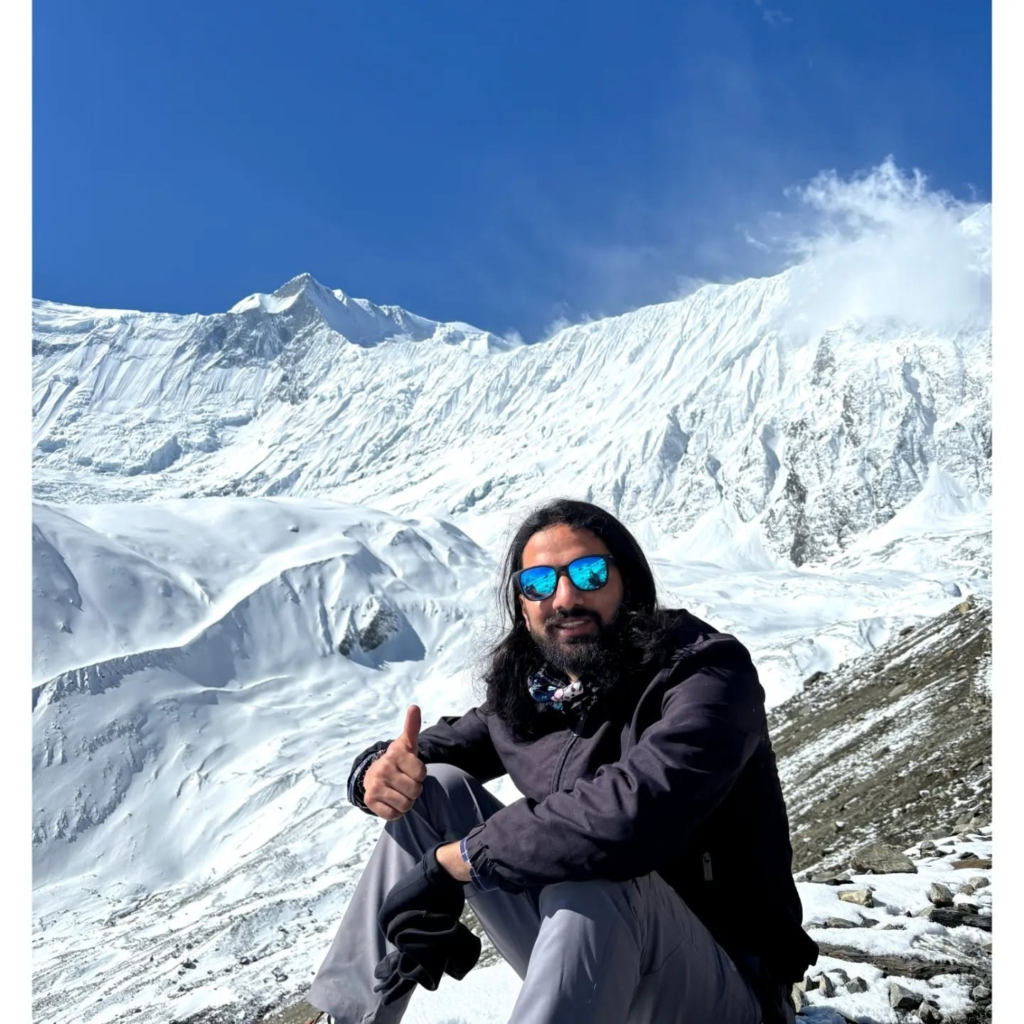
Nepal’s glaciers are more than frozen landscapes.
They are part of our water resources, ecosystems, livelihoods, and cultural heritage. Their decline could bring serious consequences, from changes in water availability and biodiversity loss to increased disaster risks and impacts on communities that depend on mountain ecosystems.
The Himalayas that once appeared eternal to me are now a reminder that even the most enduring landscapes can change.
As a young glaciologist, I believe we have a responsibility to understand those changes and communicate them to the people who will ultimately be affected. We are not merely observers of the cryosphere. We are its custodians.
Protecting Nepal’s glaciers will require science, technology, policy, community participation, and political commitment. Most importantly, it will require recognizing that the future of these frozen water towers is inseparable from our own.
The glaciers are changing. The question now is how we choose to respond.
Written By: Rob Art Niraula


 Wildfires devastate southern South Korea, claiming at least 24 lives
  Nepal Now recognizing 14 mountains over 8000 meters
  How Nepal Premier League is Changing the Game