
The debate around technology, security, and economics in the United States has taken a new turn. Former President Donald Trump is exploring the idea of converting government subsidies, given to Intel through the CHIPS and Science Act, into a 10% equity stake in the company. This plan has attracted support, criticism, and global attention, as it could redefine the relationship between government and private firms in strategic industries.
Trump administration wants to turn chip subsidies into equity stake in Intel
Instead of giving Intel direct subsidies or grants, Trump’s team is considering converting them into ownership. The U.S. government would hold about 10% of Intel in the form of non-voting shares. This means Washington would not control how Intel operates day to day but would benefit if the company’s value rises.
The approach marks a major change in U.S. industrial policy, as it turns the government into an investor rather than only a supporter.
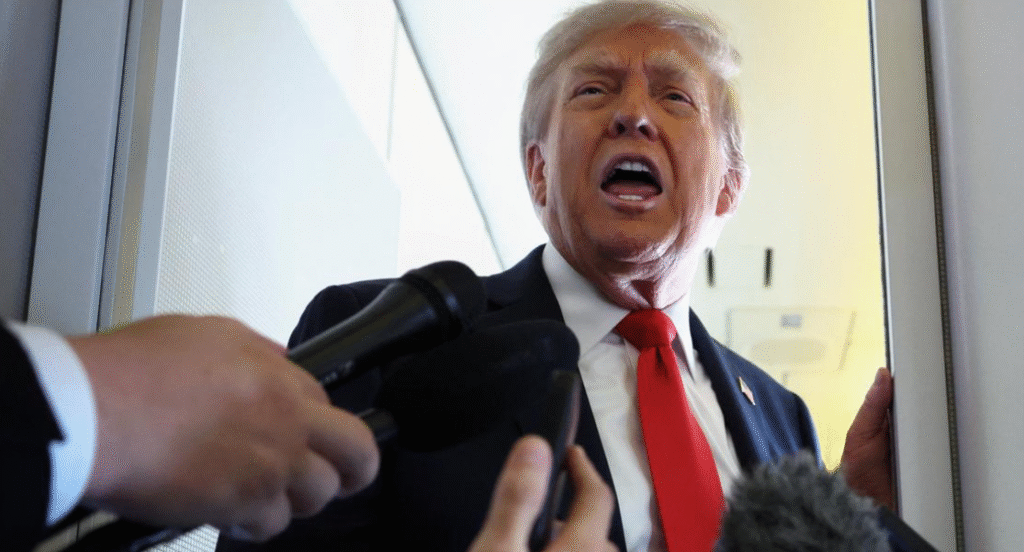
Surprisingly, this plan has found support across party lines. Senator Bernie Sanders, often a strong critic of corporate bailouts, praised the idea. He argued that if taxpayer money goes to private companies, the public should also enjoy the profits.
This unusual agreement between Trump and Sanders shows that both Republicans and Democrats see national security and public benefit as bigger priorities than party politics when it comes to semiconductor manufacturing.
Active government role in U.S. technology industry raises big questions
This decision is not just about Intel. It signals a bigger shift in how America views its key industries. For decades, the U.S. avoided direct ownership in major companies, leaving business decisions to the private sector. Now, with global competition in technology and rising concerns about China’s role in supply chains, the government wants a stronger hand in shaping the future.

This industrial policy could also extend to other companies in areas like artificial intelligence, advanced chips, and rare earth minerals.
The news quickly influenced Wall Street. Intel’s stock price jumped by about 7% as soon as the reports came out. Investors saw government involvement as a sign of stability and long-term support.
Trump’s complicated relationship with Intel’s leadership
The story also highlights Trump’s unique style of negotiation. Earlier, he had sharply criticized Intel’s CEO, Lip-Bu Tan, for having connections to Chinese tech companies. Trump even demanded his resignation. But after private meetings, Trump shifted his position and accepted Tan’s loyalty to U.S. interests.
This change opened the door for talks about federal investment. The episode reflects how Trump mixes personal pressure with business deals to achieve his goals.
The move is about more than just Intel. It reflects Trump’s vision for America’s future role in global technology. By taking a direct stake in chipmakers, the government ensures that public money creates long-term national benefits. It also reduces the country’s reliance on foreign suppliers, especially in Asia.
Possible risks of government ownership in technology companies
While the plan looks bold, critics raise important concerns. Some fear that mixing politics with private companies could lead to inefficiency or favoritism. Others say that government should not interfere in corporate decisions, as this could hurt innovation.
At its core, this move reveals Trump’s belief that America must act strongly to protect its industries. Rather than relying only on private markets, he wants the government to become a stakeholder in critical companies. If this approach expands to other industries, it could reshape how America competes with China and Europe in the decades ahead.


 Canada and China reset strategic partnership under Trump pressures
  Trump Aggressive Push to Oust Maduro: Drugs, Gangs, Oil, and Geopolitical Dominance
  Trump Faces Backlash as Canadian Tourism to US Plummets in 2025
  Trump ‘Patriot Games’ Announcement Sparks Widespread Dystopian Parallels to ‘The Hunger Games’
  Trump Travelled on at Least 8 Epstein Flights, Over 11,000 New Files Released
  Donald Trump Sues BBC for Billions Over Allegedly Edited January 6 Speech