
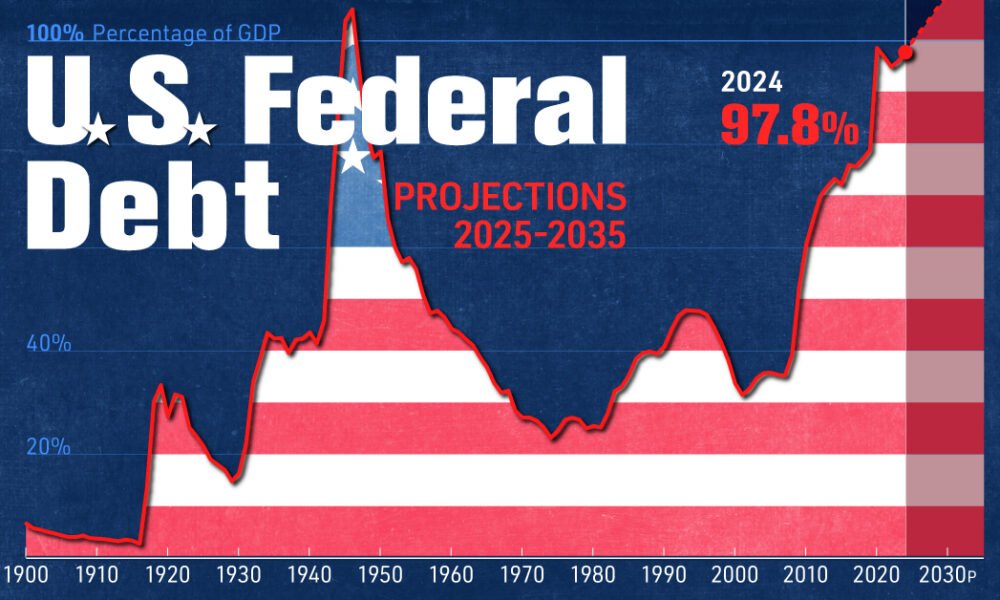
As of January 1, 2026, the US national debt stands at approximately $38-39 trillion, with debt held by the public around 120-123% of GDP. This marks a historic high, driven by persistent deficits, policy changes like the 2025 reconciliation act adding trillions via tax cuts and spending, and elevated interest costs.
Risks to the Global Economy
A sudden fiscal crisis stays unlikely in the near term thanks to the dollar’s reserve currency status and strong demand for US Treasuries. However, the trajectory poses gradual but serious risks: higher borrowing costs could ripple worldwide, erode investor confidence, pressure interest rates globally, and slow US growth—which accounts for about a quarter of world GDP.
In extreme scenarios, loss of faith in US fiscal sustainability might accelerate de-dollarization efforts or trigger financial market instability, fracturing interconnected global systems. Experts emphasize that while no immediate fracture looms, unchecked debt growth heightens vulnerability to shocks like recessions or geopolitical events, potentially leading to inflation, reduced investment, and broader economic fragmentation over time.


 US Removes India Map from Trade Release After Pakistan Protest
  US Ambassador Nominee’s Iceland State Joke Sparks Backlash
  Korea’s M2-to-GDP ratio twice US., controversy renewed
  Iran Warns “We Are Ready for War” as Crackdown on Protests Intensifies
  US Energy Secretary Chris Wright Warns North Korea and Iran After Tanker Seizure
  US Slams China’s Taiwan Drills While Launching Military Operation in Venezuela