
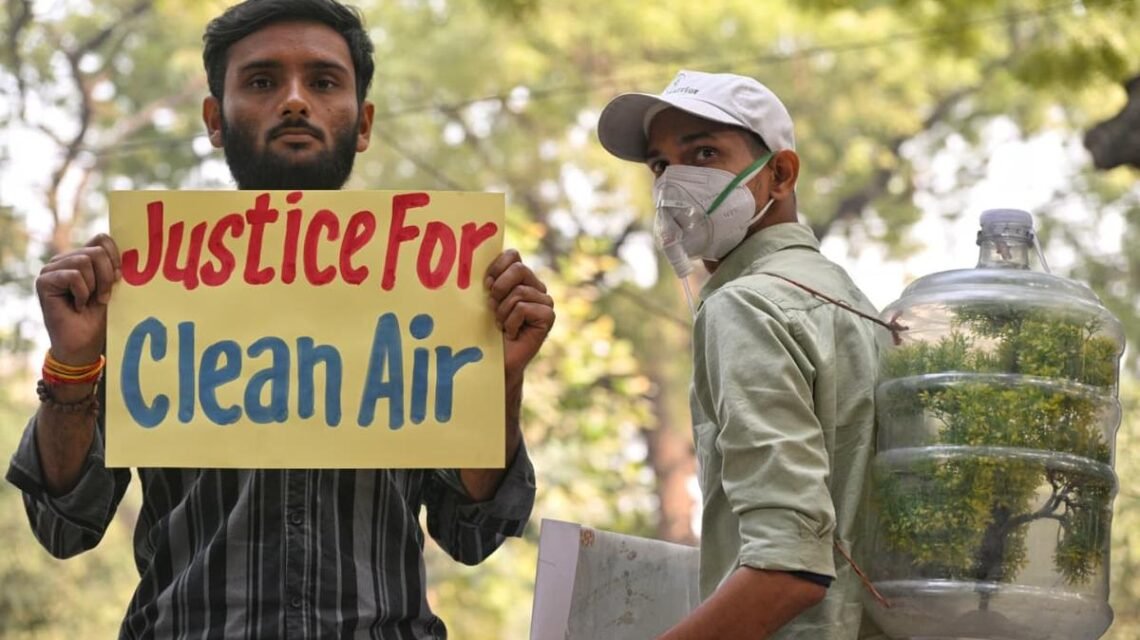
In a fresh wave of activism, a “musical protest” took place at Delhi’s Jantar Mantar where an artist performed a soul-stirring “pollution song” to draw attention to the relentless air-quality crisis haunting the capital.
The protest was not your usual sloganeering and placards. Instead, it used music a powerful medium to express collective anguish as a tool for resistance. According to the report, the musician, who described himself as a “pollution refugee,” had relocated to the hills to escape Delhi’s toxic smog. Yet, driven by concern for fellow citizens, he returned to perform at Jantar Mantar hoping to awaken public consciousness about the urgency of clean air.
Participants included concerned residents, environmental activists and cultural performers. Many carried placards demanding immediate governmental intervention and long-term solutions for air quality. Others spoke of rising health issues, especially among children and the elderly, pressing home the point that pollution is not just a seasonal nuisance but a persistent public-health emergency.
Observers say this musical protest reflects a broader trend: ordinary citizens now increasingly embrace creative methods — art, music, culture to protest environmental degradation. The aim: to transcend traditional demonstration formats and reach hearts as well as minds.
Whether this creative pressure leads to policy change remains to be seen. But for now, at least, it reminds Delhi — and the world that the right to breathe clean air deserves attention, urgency and, sometimes, a song.


