
The Trump administration’s decision to expand Immigration and Customs Enforcement operations in Chicago has ignited a fierce political battle between federal leaders and local officials. Homeland Security Secretary Kristi Noem confirmed the move during her recent appearance on Face the Nation, stressing that the administration aims to strengthen immigration enforcement while prioritizing action against violent criminals.
Homeland Security outlines expanded ICE operations in Chicago
Secretary Noem stated that ICE already operates in Illinois but emphasized that additional resources will soon be deployed to Chicago. She pointed out that immigration enforcement remains a priority for the Trump administration, even as local leaders resist federal involvement. When pressed about the possible use of the National Guard, Noem paused but left the option open, underscoring that the president retains authority to order such deployments.
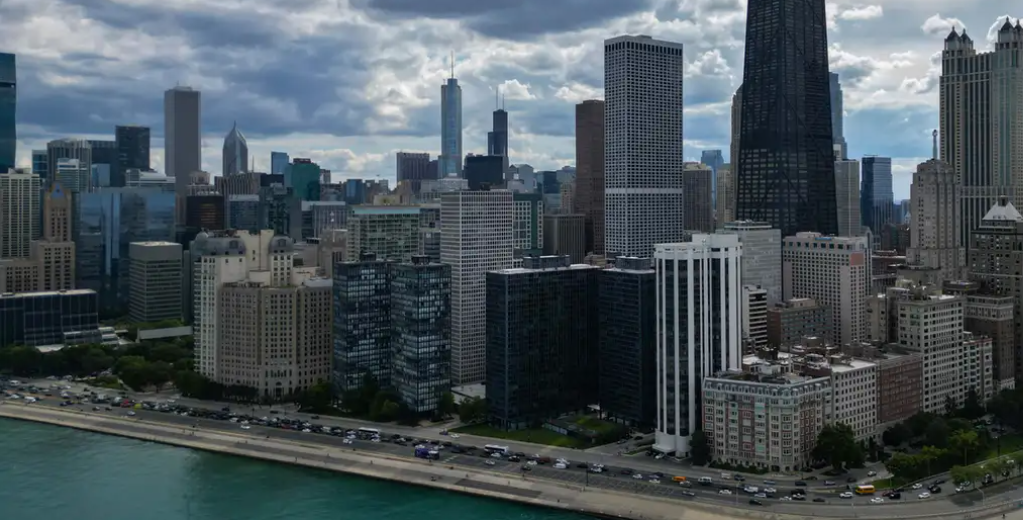
Her comments reflect a broader push by the administration to intensify enforcement in major U.S. cities, a strategy framed as necessary for public safety but criticized by opponents as politically motivated.
Naval Station Great Lakes considered as DHS operations hub
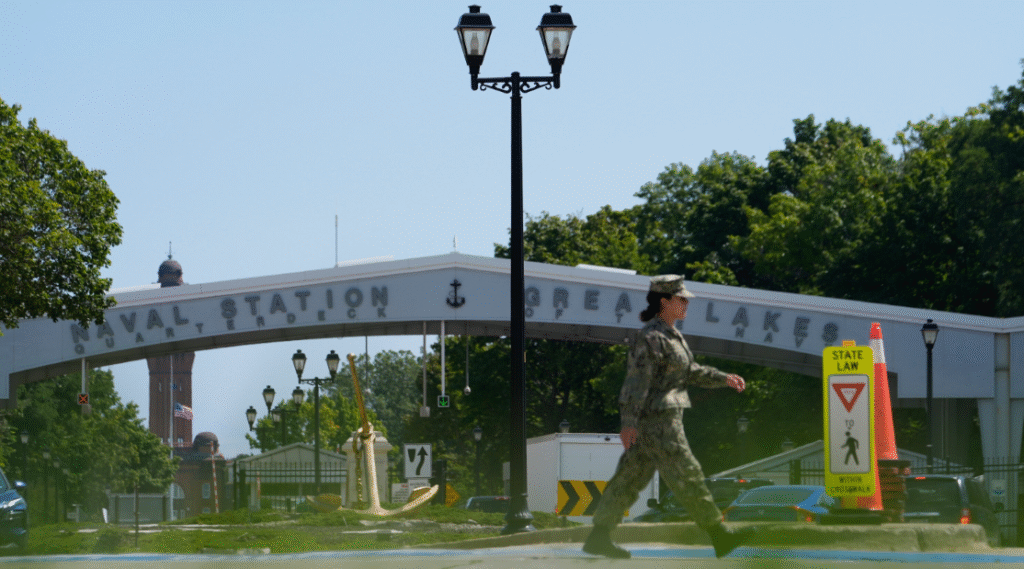
According to reports from The Wall Street Journal and the New York Post, the administration may transform Naval Station Great Lakes into a central hub for expanded ICE and Homeland Security activities. Located about 35 miles north of Chicago, the base would offer office space, logistical support, and serve as a command center.
Plans under discussion involve sending roughly 250 Department of Homeland Security personnel to the region. This surge would enable ICE to conduct larger-scale enforcement operations while coordinating efforts with federal agencies.
Chicago leaders reject federal expansion plans
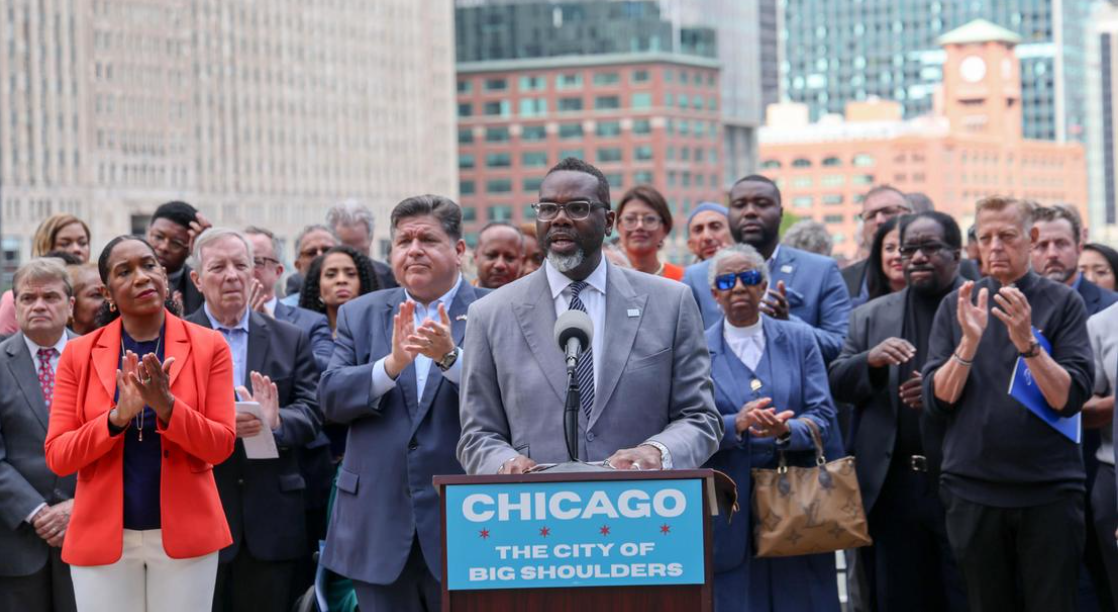
Chicago officials reacted swiftly and forcefully. Mayor Brandon Johnson signed an executive order directing the Chicago Police Department not to cooperate with ICE or any federal military deployments. His order also mandates that officers must wear uniforms, use body cameras, and clearly distinguish themselves from federal agents to avoid confusion during enforcement actions.
Illinois Governor J.B. Pritzker also condemned the plan, calling it un-American. He pledged, moreover, to challenge any deployment of troops or federal officers in court. In his view, Pritzker argued that such federal involvement not only threatens state sovereignty but also, more critically, undermines community trust.
Clash between federal immigration policy and sanctuary city principles
Chicago’s identity as a sanctuary city lies at the heart of the dispute. Local leaders argue that protecting immigrant communities from federal crackdowns fosters cooperation with law enforcement and strengthens public safety. Mayor Johnson highlighted that violent crime in Chicago has dropped by 21 percent this year, contradicting the federal narrative that the city faces rising criminal threats.
Trump administration officials, however, maintain that stricter enforcement is necessary. They insist that sanctuary policies shield individuals who violate immigration laws and limit the federal government’s ability to act effectively.


 Canada and China reset strategic partnership under Trump pressures
  Trump Aggressive Push to Oust Maduro: Drugs, Gangs, Oil, and Geopolitical Dominance
  Trump Faces Backlash as Canadian Tourism to US Plummets in 2025
  Trump ‘Patriot Games’ Announcement Sparks Widespread Dystopian Parallels to ‘The Hunger Games’
  Trump Travelled on at Least 8 Epstein Flights, Over 11,000 New Files Released
  Donald Trump Sues BBC for Billions Over Allegedly Edited January 6 Speech