
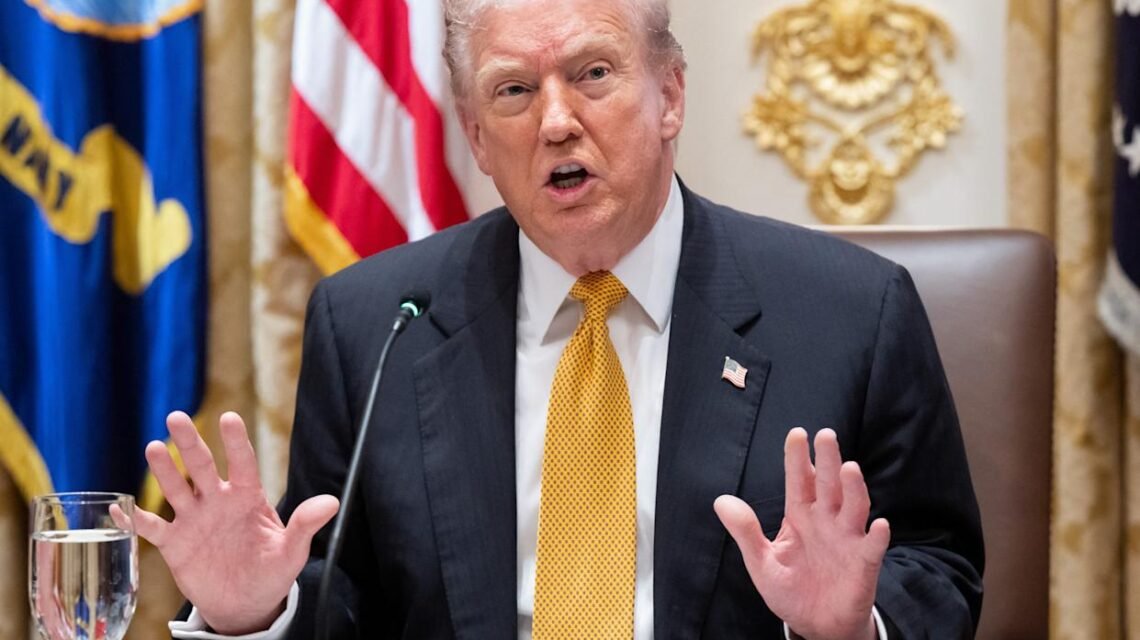
U.S. President Donald Trump has doubled down on his tariff-driven economic agenda, promising American families a yearly $2,000 middle-class dividend if he returns to the White House. He argues that revenue generated from new tariffs on imports would directly support American households and strengthen the country’s financial standing.
Tariff-Funded Middle-Class Dividend Gains Spotlight in U.S. Election Discourse
Trump revealed that his proposed tariff strategy would impose broad import duties, which he claims will reduce dependence on foreign manufacturing and increase federal revenue. He says that money would then return to American families in the form of direct financial support worth up to $2,000 a year.
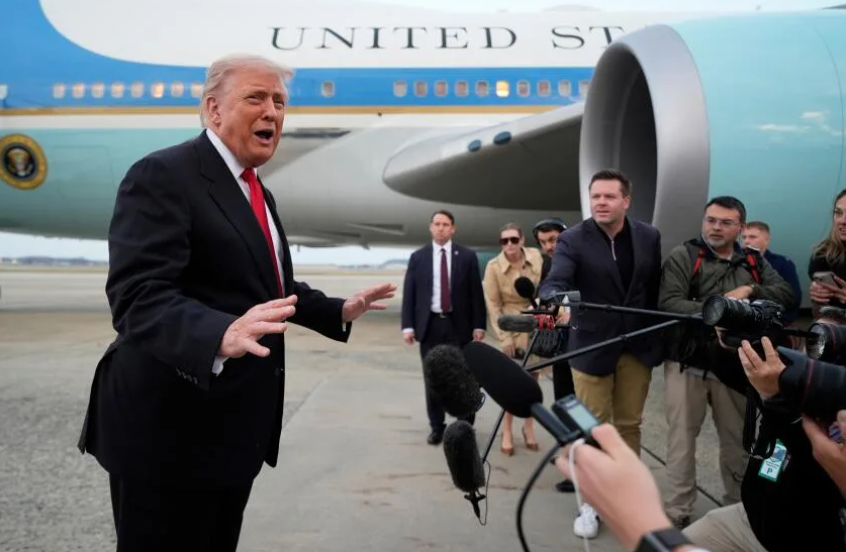
He framed this plan as a win for ordinary Americans, especially those struggling with high living costs, rising interest rates, and economic uncertainty. Trump believes this formula would boost local industry while easing pressure on middle-income households.
Growing Debate Over Economic Impact of Trump’s Tariff-Driven Blueprint
Economists, however, remain divided. Critics argue that tariffs often raise consumer prices because companies pass costs to buyers. They warn that the scheme could increase the cost of everyday goods, countering the financial benefits of the dividend. Some experts also question whether tariff revenue alone is sustainable enough to fund long-term payouts.
Supporters of Trump’s model insist that boosting domestic production and reshoring industries will create jobs and strengthen economic resilience. They also claim that countries reliant on access to the U.S. market would eventually adjust to new tariffs without long-term inflation shocks.
Election Momentum Builds as Trump Shapes Populist Economic Narrative
Trump’s latest pledge reflects a broader campaign strategy focused on economic nationalism, household affordability, and American manufacturing revival. His message is resonating with voters frustrated by global supply chain dependence and rising household expenses.
As the election season intensifies, the tariff-dividend proposal has become a focal point of policy debates. It signals a clear contrast with traditional economic frameworks used over the past decades. Whether the plan becomes a turning point in the race or fuels deeper economic polarization will unfold as public scrutiny and expert evaluation continue.


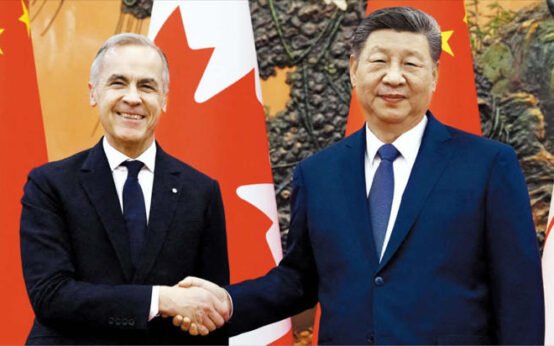 Canada and China reset strategic partnership under Trump pressures
  Trump Aggressive Push to Oust Maduro: Drugs, Gangs, Oil, and Geopolitical Dominance
  Trump Faces Backlash as Canadian Tourism to US Plummets in 2025
  Trump ‘Patriot Games’ Announcement Sparks Widespread Dystopian Parallels to ‘The Hunger Games’
  Trump Travelled on at Least 8 Epstein Flights, Over 11,000 New Files Released
  Donald Trump Sues BBC for Billions Over Allegedly Edited January 6 Speech