
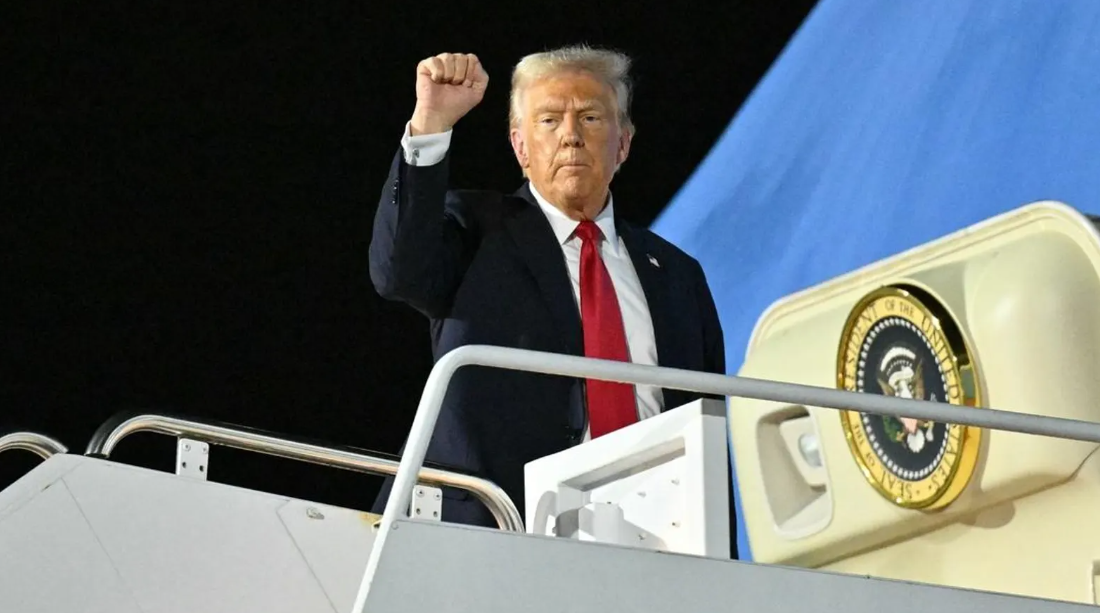
President Donald Trump has officially ordered the termination of one-cent coin production across the United States. The decision marks the end of a long-standing debate over whether the penny still holds practical value in a rapidly digitizing economy.
Rising Costs Drive Decision to End Penny Production
For years, economists and policymakers have criticized the penny for being more expensive to produce than it’s worth. According to data from the U.S. Mint, it costs roughly 3.1 cents to make a single one-cent coin, primarily due to the rising prices of copper and zinc. President Trump’s administration has argued that continuing production of such a coin “makes no financial sense” when taxpayers bear the cost.
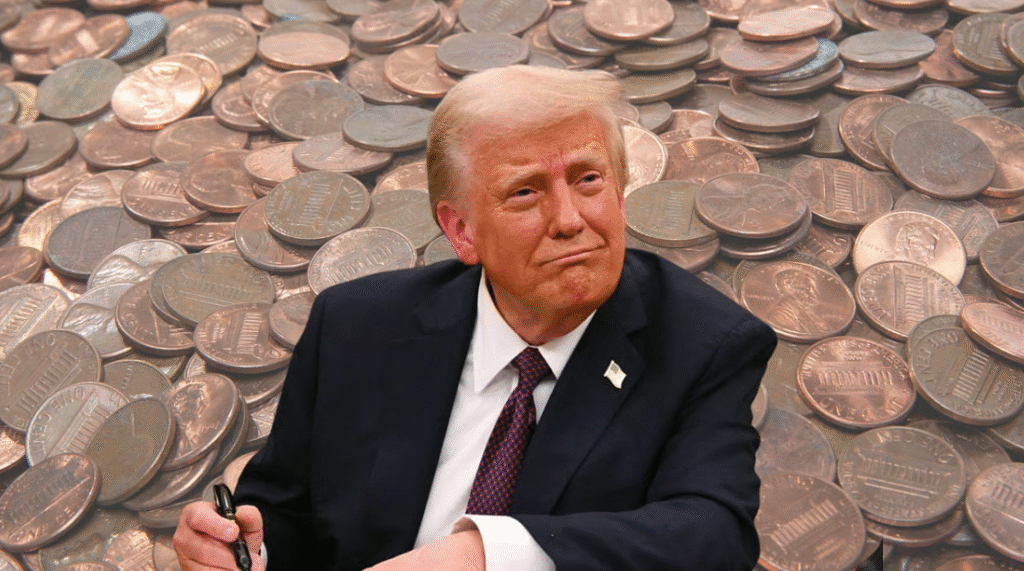
Speaking at a recent press briefing, Trump emphasized that cutting unnecessary government expenses is key to keeping the economy efficient. “Every cent counts, but sometimes not every cent is worth keeping,” he remarked.
Economic and Public Reactions to the End of the Penny
The announcement has sparked divided opinions among the public and economists alike. Supporters hail the decision as a common-sense fiscal reform that could save the government hundreds of millions of dollars annually.
However, critics warn that the removal of the penny might lead to price rounding issues, as cash transactions could be rounded to the nearest five cents. Some fear this might slightly increase the cost of everyday purchases, especially for those who rely heavily on cash.
Countries like Canada, Australia, and New Zealand eliminated their smallest denominations years ago, reporting no significant inflationary effects. The U.S. is now following a similar path, aligning its monetary practices with global trends in financial efficiency.


