

Pakistan’s financial landscape is facing another critical milestone as currency in circulation has reached Rs10.8 trillion, according to the latest data from the State Bank of Pakistan . This record-breaking figure reflects not only the growing reliance on cash but also the underlying fragility of the country’s economy, where inflation, instability, and lack of trust in institutions continue to drive people away from banks and toward informal systems.
Rising cash in circulation reflects public distrust in banking system
The sharp rise in physical currency highlights a deeper problem: the erosion of public confidence in financial institutions. When people choose to hold money outside banks, it signals fear of instability, restrictive policies, or future shocks.
For many ordinary Pakistanis, keeping cash at home feels safer than relying on banks, especially after repeated economic crises, banking restrictions, and currency devaluations. Businesses, too, often prefer cash transactions to avoid taxation or formal scrutiny, fueling a parallel economy that weakens state revenue collection.
Inflationary pressures and currency depreciation move cash hoarding
Inflation in Pakistan has remained stubbornly high, with food, fuel, and utility prices eating into household budgets. Ordinary citizens face shrinking purchasing power, while businesses struggle with rising input costs. Against this backdrop, holding cash has become a short-term survival tactic.
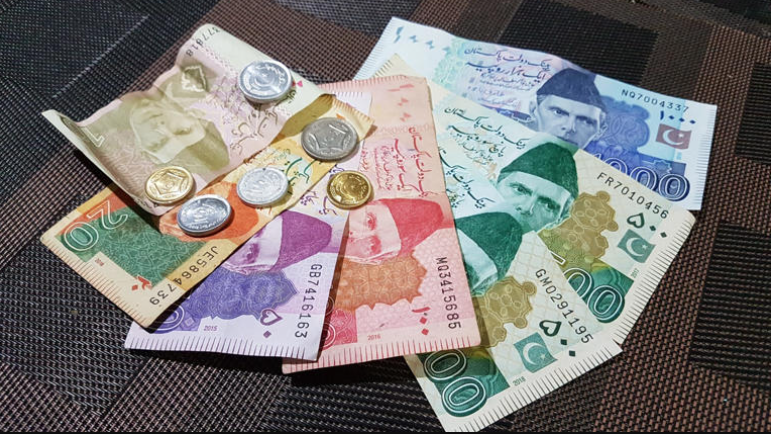
Many fear that keeping savings in banks, especially in rupees, exposes them to further depreciation, as the local currency has repeatedly lost value against the U.S. dollar. This cycle of devaluation feeds distrust and accelerates the preference for liquidity over savings.
Political uncertainty undermines economic stability
The surge in cash circulation cannot be separated from Pakistan’s political volatility. Frequent changes in government, clashes between political parties, and inconsistent economic policies have all undermined confidence in state institutions.
Investors remain cautious, and households adopt defensive financial behaviors—such as withdrawing deposits, avoiding long-term savings, and relying more heavily on cash transactions. Until there is greater political stability and policy continuity, experts argue, trust in the financial system will remain fragile.
Informal economy expands as cash dominates transactions
The preference for cash also strengthens Pakistan’s informal economy, which is already vast and largely untaxed. Transactions in cash often go unrecorded, depriving the government of much-needed revenue. This widens the fiscal deficit and forces greater dependence on foreign aid or loans from international institutions such as the IMF.
The unprecedented rise to Rs10.8 trillion in cash circulation is not just a technical statistic; it is a warning signal about the state of Pakistan’s economy. It reflects how deeply people distrust financial institutions and how fragile the country’s economic framework has become.


