
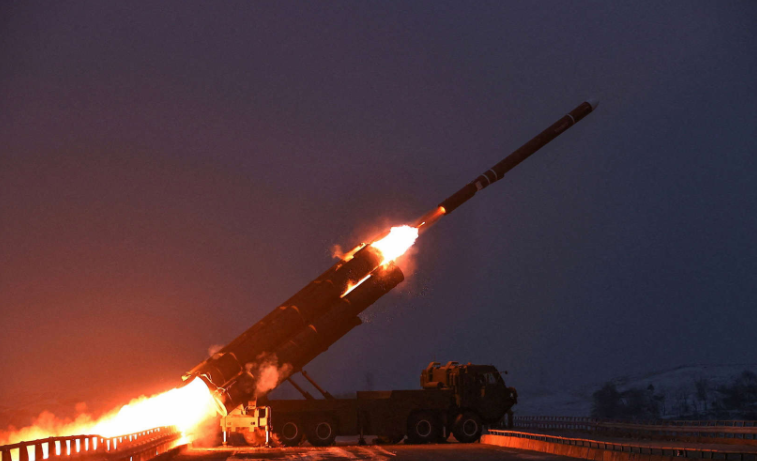
North Korea launches multiple ballistic missiles into the Sea of Japan on January 4, 2026, just hours before South Korean President Lee Jae-myung departs for a state visit to China. This provocative act Pyongyang’s first missile test of the year heightens tensions on the Korean Peninsula and casts a shadow over diplomatic efforts.
Timing Seen as Deliberate Signal
The missiles launch around 7:50 a.m. local time from near Pyongyang, flying approximately 900 km before falling into the sea. South Korea’s Joint Chiefs of Staff and Japan’s Defense Ministry confirm the details, with no immediate threat to territory reported.
Analysts view the timing as intentional: a message to deter closer Seoul-Beijing ties and counter discussions on Korean Peninsula peace. President Lee’s agenda includes urging China—North Korea’s key ally—to play a “constructive role” in denuclearization and dialogue.
Reactions from Seoul and Allies
South Korea convenes an emergency National Security Council meeting, condemning the launch as a “provocative act” violating UN resolutions. The presidential office briefs Lee en route, maintaining full readiness posture.
The US, Japan, and others echo criticism, strengthening surveillance. Experts note Kim Jong Un’s recent factory visits and calls for expanded missile production ahead of a party congress.


 Mercedes-Benz to accelerate localisation as China revenue slump hits 2025 profits
  US Energy Secretary Chris Wright Warns North Korea and Iran After Tanker Seizure
  China Bans Dual-Use Exports Including Rare Earths to Japan Over Taiwan Remarks
  China’s DeepSeek Upgrades Chatbot with Advanced ‘Interleaved Thinking’ Feature Amid Next Model Buzz
  MindRank Advances China’s First AI-Assisted Drug to Phase 3 Trials, Slashes R&D Costs by 60%
  China Enforces 50% Domestic Equipment Rule for Semiconductor Expansion