
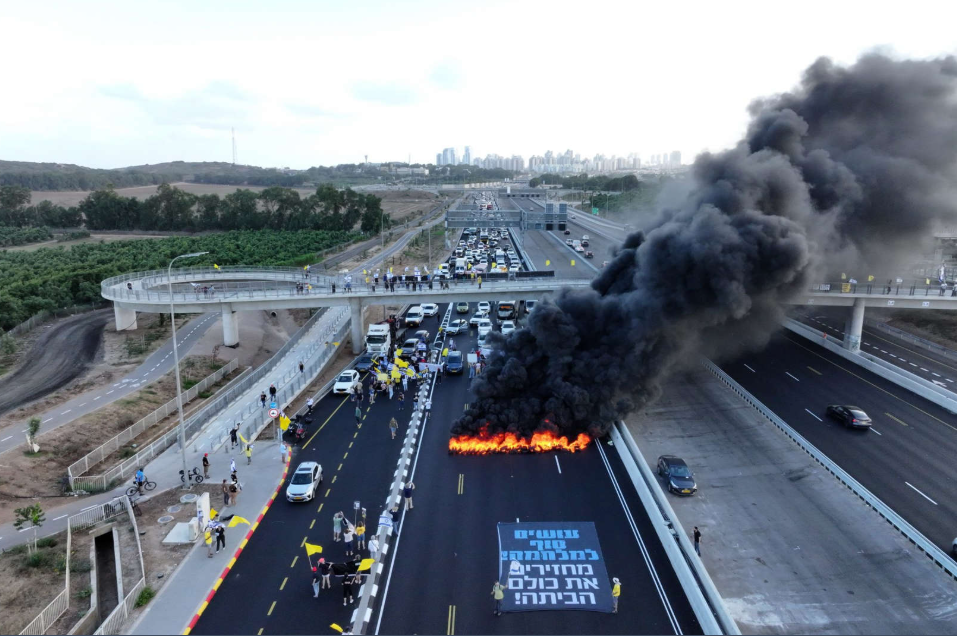
Israel is facing one of the largest protest movements in its recent history. Across the country, thousands of citizens have taken to the streets, calling on the government to change its approach to the war in Gaza. Families of hostages, survivors of captivity, young people, and workers from many sectors are joining together to demand peace, accountability, and urgent action.
Day of Disruption Across the Nation
On what protesters called a Day of Disruption, demonstrations swept through Israel. Crowds blocked major highways, caused traffic jams in Tel Aviv, and slowed movement near Ben Gurion Airport. In Jerusalem, demonstrators gathered outside Prime Minister Netanyahu’s office, chanting for a ceasefire and for the safe return of the hostages held in Gaza.
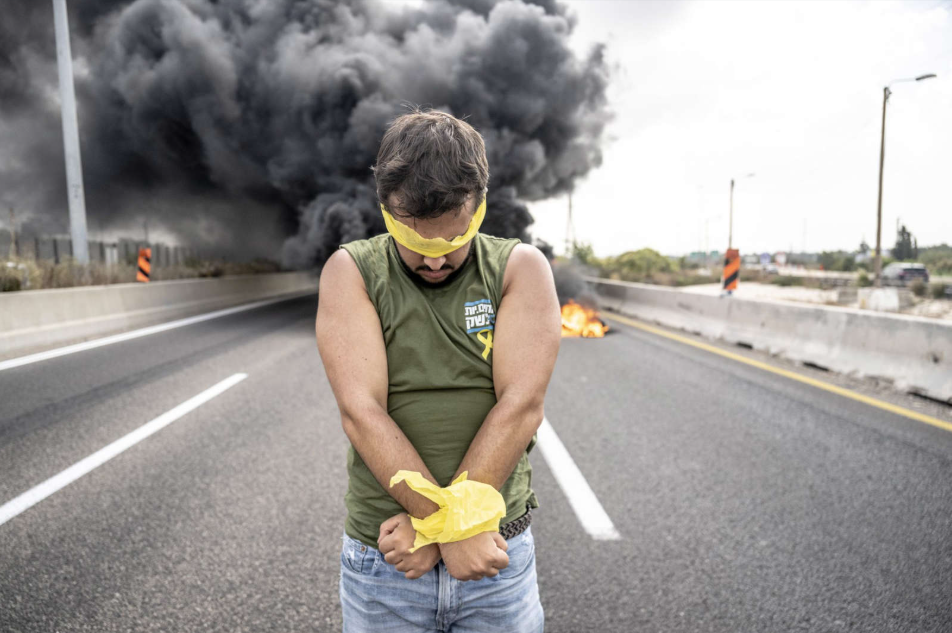
The size and energy of the protests made it clear that many Israelis have lost patience with the current course of the war. Protesters are no longer only activists or political opponents; they include families, workers, and even people who once supported the government’s decisions.
Families of Hostages at the Heart of the Protests
The most powerful voices came from families of the kidnapped and from survivors of captivity. Doron Steinbrecher, who spent more than 470 days underground in Gaza, shared her painful memories of living in fear, surrounded by darkness and constant threats.
These testimonies not only brought emotion and urgency to the protests, but also deepened their impact. As a result, for many Israelis, hearing directly from hostages and their families transformed the political debate into a human struggle—one that, increasingly, touches every household. In this way, personal stories became a powerful bridge between abstract policy and lived experience.
The protests were not limited to city squares. Strikes affected daily life across the country. Workers in hospitals, schools, and even in the aviation sector joined the demonstrations by stopping work for hours. Businesses in Tel Aviv and Haifa also closed their doors in solidarity.
Anger at the War and Concern for Gaza
While the protests in Israel grew, the war in Gaza intensified. Israeli air raids struck densely populated neighborhoods, and humanitarian groups reported that conditions in Gaza were collapsing. Over 61,000 Palestinians have died since the war began, making the conflict one of the deadliest in the region’s modern history.

Protesters argued that continued bombings not only harm civilians but also put Israeli hostages at even greater risk. They believe that peace negotiations offer a safer and more effective way to bring loved ones home than military escalation.
Democracy and Peace at a Crossroads
At the center of the debate is a bigger question: can Israel continue the war and still protect its democracy and moral values? Prime Minister Netanyahu insists that only military strength will end the conflict and free the hostages. But growing numbers of Israelis disagree, seeing his stance as unsustainable and harmful.
The protests have made one fact clear: Israeli society is at a crossroads. Citizens are demanding a shift from war toward peace, not only to save lives but also to safeguard the future of their country. The outcome will determine whether Israel can balance its security needs with its democratic principles in the face of one of the most challenging moments in its history.


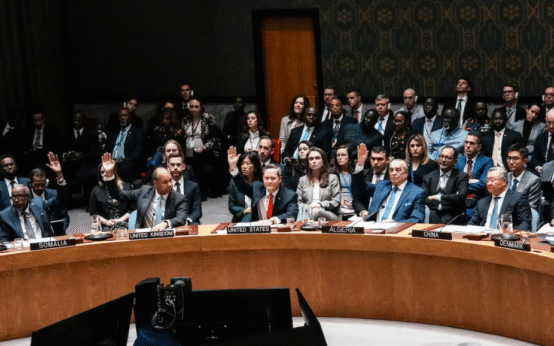 UN Security Council Endorses Trump’s Gaza Plan, While Hamas Rejects Key Provisions
  Trump Announces Gaza Peace Deal Israel Hamas Sign Agreement
  Germany’s Johann Wadephul Declares Support for Israel
 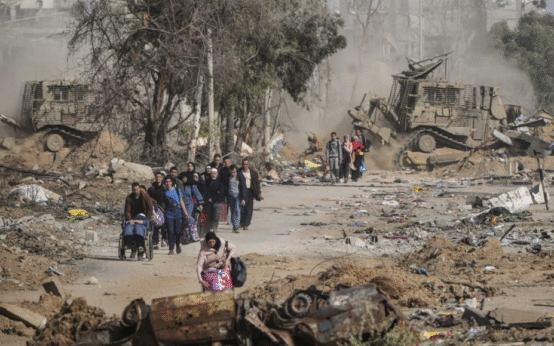 Airstrikes and Gunfire Kill at Least 57 in Gaza as Conflict Deepens
 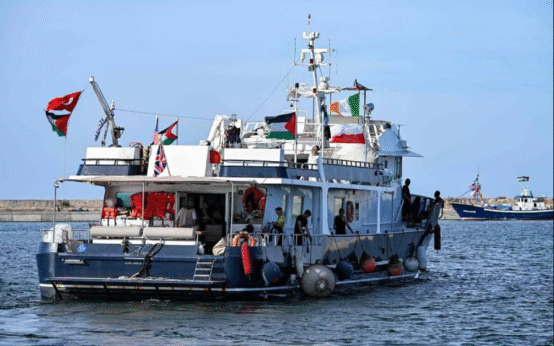 Italy sends naval vessel to help Gaza aid flotilla
 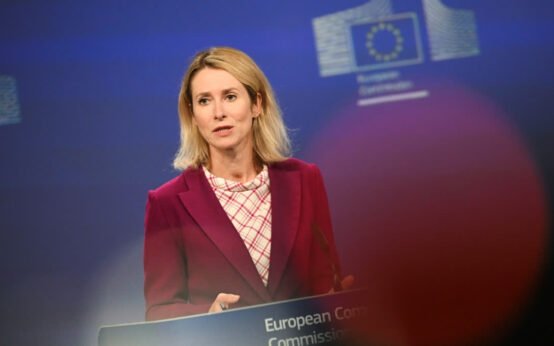 EU lays out new tariffs and sanctions on Israel over war in Gaza