
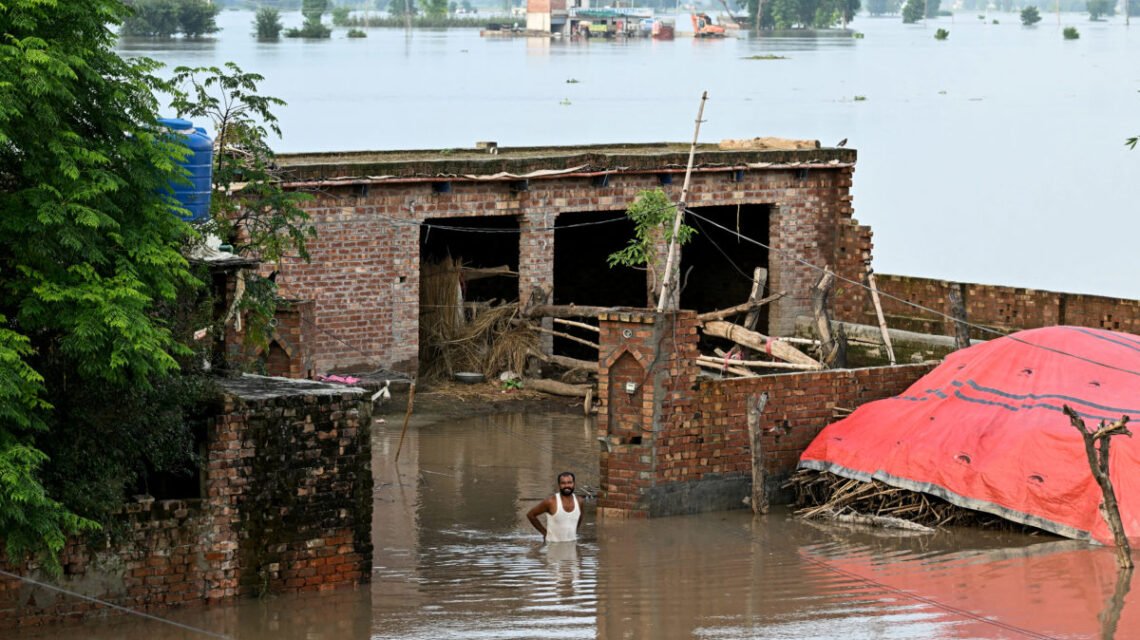
Punjab, Pakistan’s most densely populated province, is grappling with one of the worst natural disasters in recent memory. Unrelenting monsoon rains, combined with river overflows, have forced more than half a million residents to flee their homes. The catastrophe has left families stranded, farmlands destroyed, and communities cut off from essential services, creating a humanitarian emergency that continues to worsen.
Monsoon rains and river flooding devastate Punjab’s rural communities
The crisis began when days of heavy monsoon showers caused the Sutlej and Ravi rivers to overflow, breaching embankments and submerging entire villages. Rural communities in low-lying areas were hit the hardest, with families forced to abandon their homes at short notice.
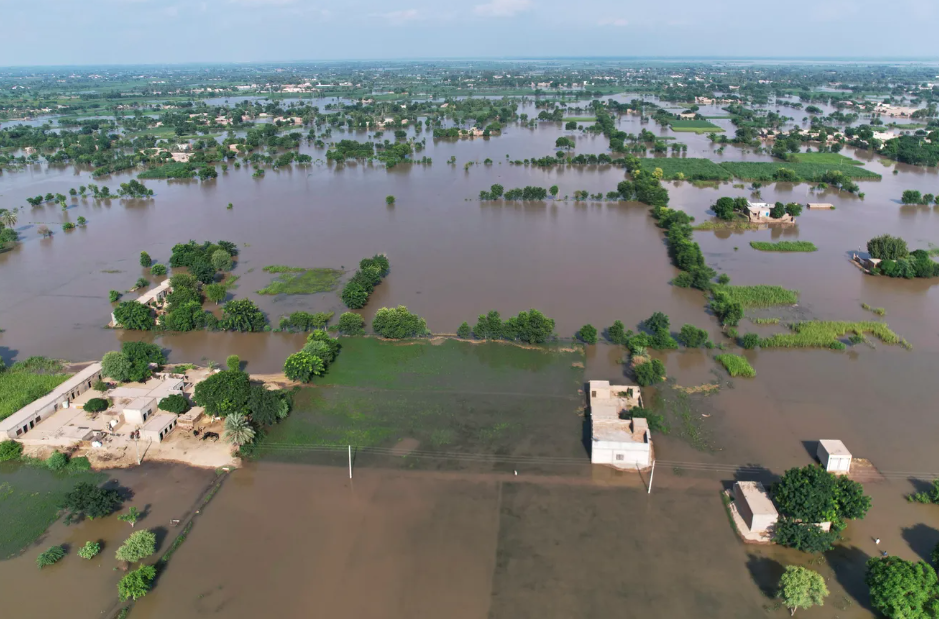
Many households lost not only shelter but also livestock and stored crops. Rescue teams battled to reach remote areas after floodwaters submerged roads, relying solely on helicopters and boats for evacuation and relief.
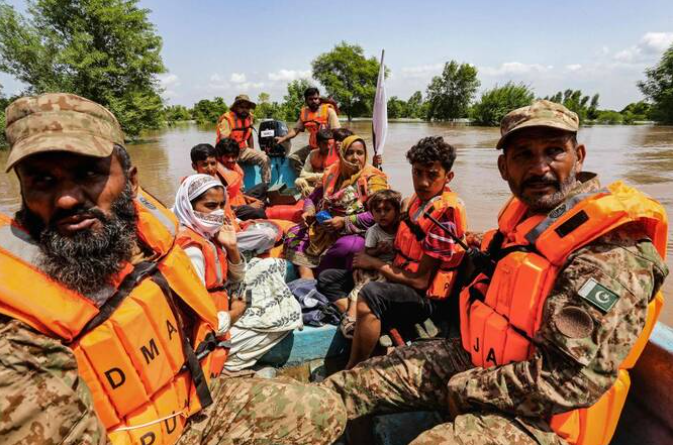
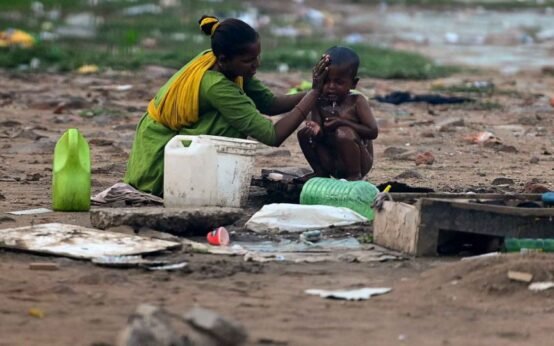
Authorities have displaced more than 500,000 people, relocating thousands to makeshift camps in schools, government buildings, and on higher ground. Families have little more than the clothes they managed to carry, and many wait in long lines for food rations and clean water.
Government and military launch large-scale rescue and relief operations
The Punjab provincial government, supported by the Pakistani military, has launched round-the-clock operations to save stranded families and deliver supplies. Helicopters have been dropping food parcels to villages cut off by floodwaters, while soldiers and volunteers reinforce embankments in areas where riverbanks remain vulnerable.
Prime Minister Shehbaz Sharif announced federal financial support for affected families and pledged to prioritize the reconstruction of destroyed homes and infrastructure once the waters recede. Still, critics argue that Pakistan’s flood management systems remain inadequate, and investment in disaster preparedness has lagged behind the scale of risk.
The floods have devastated thousands of acres of farmland, wiping out crops and creating uncertainty about food supplies in the coming months.
Climate change impact on Pakistan’s vulnerability to extreme weather
Environmental scientists emphasize that the severity of Punjab’s floods cannot be seen in isolation but as part of a broader pattern of climate change impacts. Pakistan, despite contributing minimally to global carbon emissions, ranks among the most climate-vulnerable nations in the world. Rising global temperatures are increasing the intensity of monsoon rains and accelerating glacial melt in the north, feeding rivers that eventually flood downstream provinces like Punjab.
As the scale of displacement grows, humanitarian organizations have begun to mobilize. The Pakistan Red Crescent Society, along with several international NGOs, is providing emergency food aid, medicine, and temporary shelter.


 In Our Defence Podcast: Is Bangladesh Becoming East Pakistan 2.0?
  Himanta Taunts Gogoi “He Can Contest Elections in Pakistan”
  Pakistan FM IMF Cannot Impose Conditions on National Interests
  PSX Market Surges IMF Nears Staff-Level Agreement
  Pakistan’s Struggle to Reduce Poverty
  Pakistan Among Early Adopters of Wi-Fi 7 in Asia-Pacific