
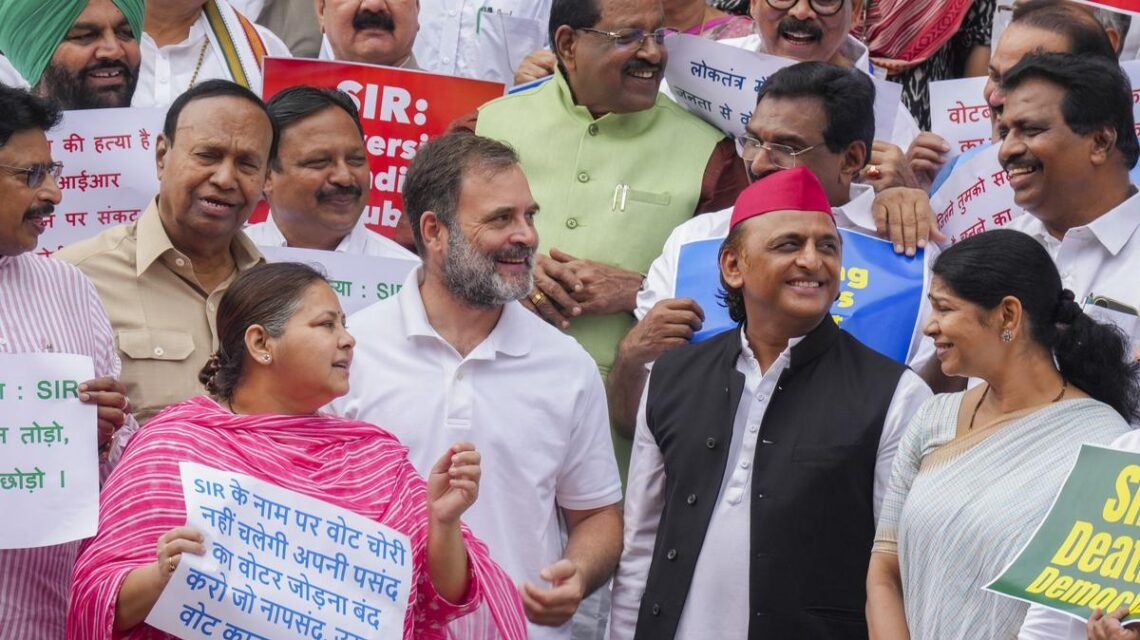
New Delhi As the Winter Session of Parliament opens on 1 December 2025, opposition parties insist that the recently completed Special Intensive Revision of electoral rolls in Bihar threatens democratic fairness, setting the stage for a heated showdown.
Opposition parties are preparing to corner the government; moreover, they are demanding a full debate over alleged irregularities, potential voter disenfranchisement, and the timing of the revision, which comes immediately after Bihar’s assembly elections. At the same time, critics argue that SIR could disproportionately impact marginalised communities, internal migrants, and poor voters, particularly those who may struggle to meet new documentation requirements. Consequently, the issue is gaining traction as a broader test of democratic fairness and accountability.
On its part, the Election Commission of India (ECI) defends the exercise, stressing that the SIR aims to remove ineligible names, update voter data and restore electoral integrity applying criteria under Article 326 that only Indian citizens of over 18 years, ordinarily resident in a constituency, qualify to vote.
As the session begins, parliamentary leaders have already warned both sides: a government speaker advised colleagues to proceed with a “cool mind,” signalling concern that protests could derail business.
With the SIR row combining electoral-fairness concerns, recent poll results, and broader national issues including a recent high-profile terror case the Winter Session could turn into one of the most turbulent in recent years.


 Government Promotes M&A-Based Succession for 56,000 Manufacturing SMEs
  Japan Government Reaffirms No-Nuclear Policy, Avoids Comment on Official’s Remarks