
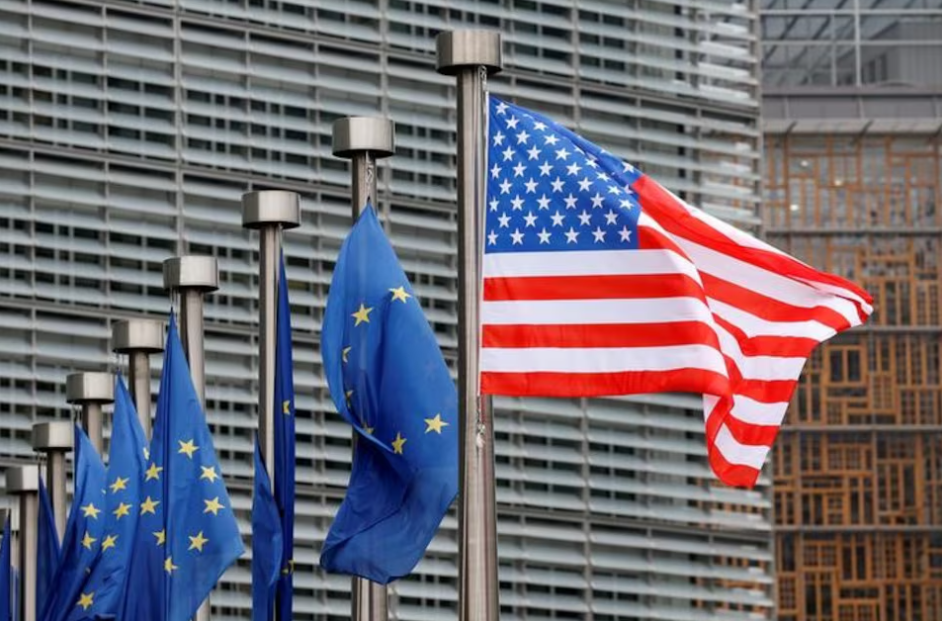
European Union’s General Court has given a strong boost to businesses and policymakers by upholding the 2023 EU–U.S. data transfer agreement. The judgment, issued in early September 2025, confirmed that the deal provides a sufficient level of protection for Europeans’ personal data when it is transferred to the United States. For thousands of companies that depend on data flows ranging from small startups to global tech giants—the ruling provides long-awaited legal certainty.
How the new framework emerged after years of turmoil
The ruling carries extra weight because it comes after a long history of failed attempts to secure safe transatlantic data flows. In 2015, the EU’s top court struck down the Safe Harbor framework, and in 2020, it invalidated the Privacy Shield.

The current framework, often called the EU–U.S. In 2023, negotiators established the Data Privacy Framework in response to earlier failures. European officials demanded stricter safeguards, and Washington responded by creating the Data Protection Review Court, offering Europeans a way to challenge U.S. data practices. The architects of this setup aimed to reassure regulators and prevent another round of legal defeats.
Challenge that brought the case to court
The case that tested the framework was brought by French lawmaker Philippe Latombe, who argued that the U.S. still had not done enough. He questioned whether the DPRC could truly operate independently and said U.S. surveillance powers remained too broad. His complaint reflected the concerns of privacy advocates who see American data-collection laws as incompatible with the EU’s strict General Data Protection Regulation .
But the General Court disagreed. Judges ruled that the agreement creates meaningful oversight and that U.S. intelligence activities are now subject to legal checks after the fact. This balance, they argued, offers an adequate level of protection comparable to European standards.
What the ruling means for companies and consumers
For businesses, the decision is a major relief. Without this framework, companies would have to rely on complex alternatives like standard contractual clauses to legally move data, often leading to higher costs and legal uncertainty. Now, firms can exchange personal data with the U.S. more freely, allowing smoother digital trade, banking operations, research collaborations, and customer services.

Consumers also benefit indirectly. A stable data-sharing system ensures that services like social media, cloud storage, cross-border healthcare research, and online shopping run without disruption. For the EU economy, the decision strengthens ties with the U.S., its largest trading partner, and signals that digital cooperation is back on track.
Critics warn of future risks and legal battles
Despite the victory for the European Commission and U.S. negotiators, critics remain skeptical. Privacy activist Max Schrems, whose lawsuits toppled the last two agreements, said the new deal still leaves big questions unresolved. He warned that mass surveillance in the U.S. has not truly disappeared and predicted that the framework could once again face legal challenges before the Court of Justice of the European Union .
This possibility means that while businesses have clarity today, they may face renewed uncertainty in the years ahead.
Beyond the courtroom, the ruling carries strategic weight. It shows the EU and U.S. can work together on sensitive issues even during times of political strain. As digital trade becomes increasingly vital, a shared framework reduces friction, boosts investment confidence, and helps protect innovation.


 Reeves argues for deeper trade partnership with EU
  Gulf states lobby US against Iran military strike
  US to host officials from Denmark and Greenland as Trump renews takeover threats
  Canadians aren’t relenting: US travel boycott holds strong
  India Wary as US Backs Pakistan With F-16 Upgrades and Mineral Projects
  Growing discontent in the U.S. as many Americans turn against Trump’s presidency