

When European Commission President Ursula von der Leyen’s plane approached Plovdiv, Bulgaria, what was meant to be a routine descent quickly turned into a tense moment for the crew. The aircraft suddenly lost its GPS navigation signal, leaving pilots unable to rely on satellite systems. Forced to improvise, the flight team circled the airport for nearly an hour before switching to backup systems and traditional navigation charts to land safely.
EU officials suspect deliberate Russian interference
Soon after the incident, European Commission spokeswoman Arianna Podesta stated that Brussels believes the disruption was not accidental. Officials pointed to Russia as the likely source, describing the GPS blackout as part of a broader campaign of hybrid threats against EU member states, particularly those closest to the eastern frontier.

Moscow, however, denied responsibility. Kremlin spokespersons rejected the accusation, claiming the interference had nothing to do with Russian activities. Still, many European security analysts argue that the timing and location of the incident fit a pattern of electronic warfare tools increasingly used by Russia against NATO and EU assets.
EU to strengthen satellite defense and resilience
In response, the EU has announced plans to expand its satellite defense infrastructure. This effort complements the Galileo satellite navigation system, which already offers Europe an independent alternative to the US-based GPS network.
By boosting satellite redundancy and detection capacity, EU leaders hope to protect both civilian and military navigation from deliberate interference. The von der Leyen incident has now accelerated political momentum for these measures, moving them from long-term plans to urgent priorities.
Reactions from Eastern Europe: calls for stronger deterrence
Eastern European leaders, long vocal about Russian hybrid threats, reacted strongly. Lithuania’s former foreign minister Gabrielius Landsbergis criticized what he called Europe’s “coalition of the concerned,” implying that condemnation without action only emboldens aggressors.
Meanwhile, Bulgarian officials stressed that their air traffic controllers had managed the situation effectively, but admitted that the country’s airspace remains highly vulnerable. For frontline EU states, the incident adds pressure to demand stronger NATO coordination on electronic warfare defense.
Broader implications for aviation and geopolitics
This incident is not only about one flight. Electronic interference allows hostile states to project power, test defenses, and intimidate rivals while staying below the threshold of open military conflict.
Europe, the challenge is twofold: protect daily civilian life from disruptions while also ensuring that military operations are not compromised by electronic warfare. The EU’s move toward stronger defense spending, satellite investment, and cybersecurity partnerships suggests a recognition that hybrid warfare will remain a central threat in the years ahead.


 Reeves argues for deeper trade partnership with EU
  Bulgaria Joins Eurozone on January 1, 2026, Despite Public Opposition and Concerns
 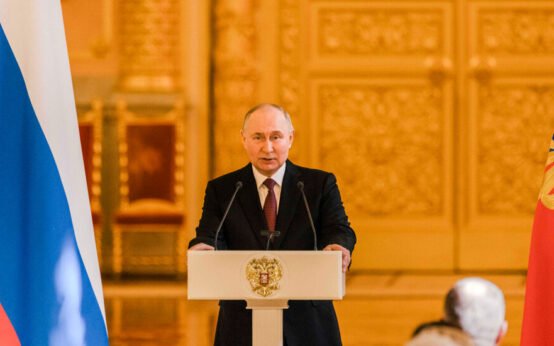 Putin warns Europe “ready for war” EU politicians urge unity and strength
 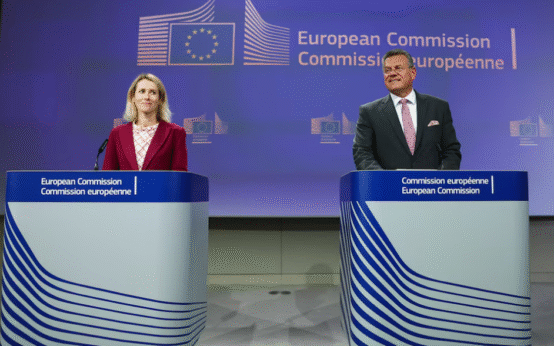 EU Presents Mercosur Trade Deal for Member State Approval
  EU court upholds smooth transfer of data from Europe to US
  Digital Taxes Put U.S –EU Trade Talks Under Heavy Strain