

Addis Ababa Ethiopian Prime Minister Abiy Ahmed has reaffirmed that the country’s security institutions have significantly advanced in their ability to safeguard Ethiopia’s sovereignty and ensure long-term stability. His remarks come at a time when the Horn of Africa faces heightened regional tensions, shifting alliances, and internal pressures for development and security reform.
Boosting Ethiopia’s defense and security capabilities
In his address, Prime Minister Abiy emphasized that Ethiopia’s defense forces, intelligence units, and law enforcement agencies have undergone substantial restructuring and modernization. These measures, he noted, are designed not only to protect Ethiopia’s territorial integrity but also to secure its path toward prosperity.

Ethiopia, historically one of Africa’s strongest military powers, has invested heavily in capacity-building for its armed forces. Over recent years, the government has procured advanced technologies, strengthened training programs, and streamlined coordination between national and regional security agencies. Abiy argued that these improvements make the country better prepared to face both conventional threats and emerging security challenges.
National sovereignty at the center of Ethiopia’s policy
Sovereignty remains a central theme in Abiy’s policy speeches. With Ethiopia facing external pressures, including disputes over the Grand Ethiopian Renaissance Dam , and internal challenges such as ethnic conflicts, the Prime Minister underscored that national sovereignty is non-negotiable.

Abiy framed the strengthening of security institutions as essential for economic growth and development. He stressed that without stability and peace, Ethiopia’s ambitious plans for industrialization, infrastructure expansion, and regional trade cannot move forward. The government envisions a secure environment that encourages both foreign investment and domestic innovation.
Regional stability and Ethiopia’s role
The Prime Minister also highlighted Ethiopia’s regional responsibilities, given its location in the Horn of Africa a region often marked by instability. Abiy stressed that Ethiopia’s growing defense capabilities not only secure the country but also contribute to broader regional peace.
As Ethiopia continues to mediate conflicts and play a role in African Union-led initiatives, a robust security framework gives it the credibility to support stability beyond its borders.
Abiy concluded his remarks with a message of reassurance, telling Ethiopians that their institutions are now more capable than ever before to defend sovereignty and secure a peaceful future. He framed the developments not as short-term fixes but as part of a long-term vision where strong security serves as the foundation for lasting prosperity.


 UNHCR Praises Ethiopia’s Leadership in Refugee Hosting Amid Global Funding Crisis
  Ethiopia Expands Early Childhood Education Nationwide with Major Investments
  Ethiopia’s 5 Million Coders Program Boosts Digital Skills Among University Students and Youth
  Ethiopia Nationwide Dialogue ECSOC Calls It a Critical Opportunity for National Consensus
  Ethiopia and UAE Reaffirm Commitment to Deepen Strategic Partnership
 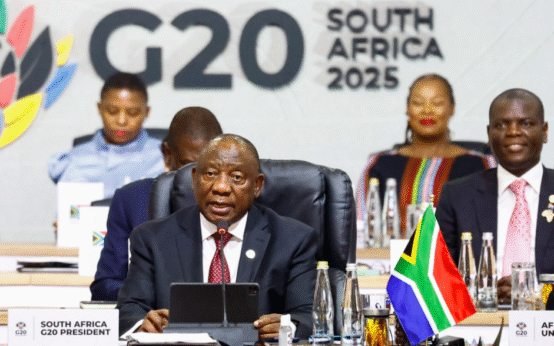 Ethiopia Raises Africa’s Voice on the World Stage at Historic G20 Summit