
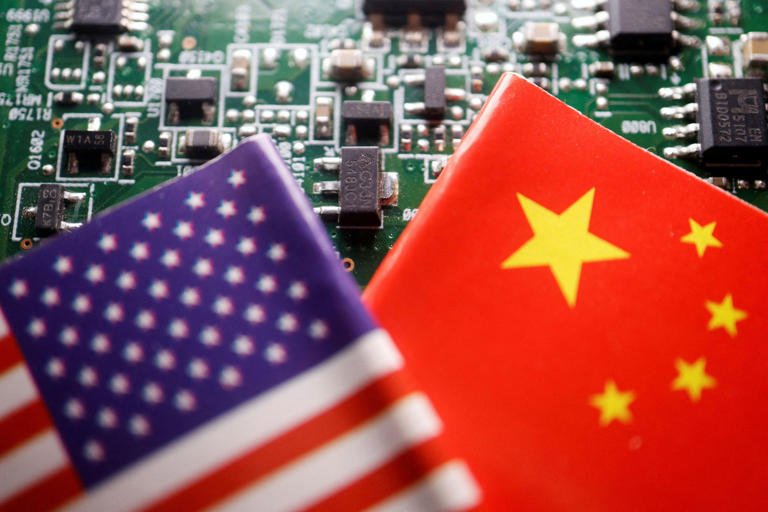
China quietly implements a policy requiring chipmakers to source at least 50% of equipment domestically when adding new production capacity. This unpublished mandate, reported on December 30, 2025, accelerates Beijing’s drive for semiconductor self-sufficiency amid U.S. export restrictions.
Key Details of the Mandate
Authorities enforce the rule through the approval process for new or expanded fabs. Companies submit procurement plans proving compliance, and applications below the threshold face rejection. Officials view 50% as a minimum, preferring higher ratios and aiming for 100% domestic equipment long-term.
This applies even where superior foreign tools from the China ,U.S., Japan, South Korea, or Europe remain available. Flexibility exists for cutting-edge lines lacking suitable local alternatives.
China Background and Motivation
The policy intensifies after U.S. curbs in 2023 banned advanced AI chips and tools. President Xi Jinping calls for a “whole nation” effort, backed by the Big Fund third phase: 344 billion yuan in 2024.
It forces adoption of local suppliers like Naura Technology and AMEC, boosting their innovation Naura filed 779 patents in 2025 and revenues up 30% in H1 2025. Naura tests etching tools on SMIC’s 7nm lines, showing progress in critical areas.


 Mercedes-Benz to accelerate localisation as China revenue slump hits 2025 profits
  China Bans Dual-Use Exports Including Rare Earths to Japan Over Taiwan Remarks
  China’s DeepSeek Upgrades Chatbot with Advanced ‘Interleaved Thinking’ Feature Amid Next Model Buzz
  North Korea Fires Ballistic Missiles Hours Before South Korean President’s China Visit
  MindRank Advances China’s First AI-Assisted Drug to Phase 3 Trials, Slashes R&D Costs by 60%
  Chinese Firms Anchor in Dubai Free Zones to Navigate Trade Barriers and Expand Reach