
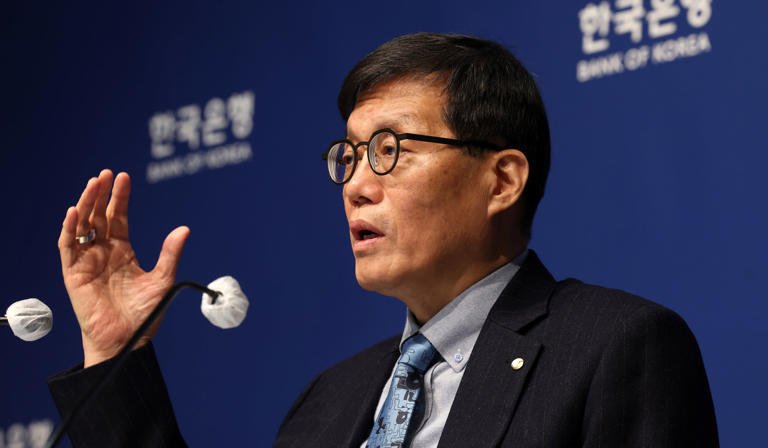
Bank of Korea Governor Rhee Chang-yong firmly rejected claims that South Korea’s elevated M2-to-GDP ratio is a primary driver of the won’s depreciation in early 2026.
He emphasized that Korea’s M2 ratio, while high compared to the US and other advanced economies, reflects structural characteristics such as high household savings, corporate reliance on bank financing, and a large shadow banking sector, not loose monetary policy or inflationary excess. Rhee pointed out that money velocity remains low and core inflation is stable below 2%, undermining arguments that excessive liquidity is weakening the won.
The governor also noted that the BOK has actively used macroprudential tools and foreign exchange interventions to stabilize the currency when needed, and dismissed calls for aggressive gold purchases or sharp monetary tightening as unnecessary and potentially counterproductive.
Rhee’s remarks aim to calm market speculation and counter criticism from some economists and opposition lawmakers who argue that prolonged high M2 growth has contributed to asset bubbles and currency weakness. The statement reinforces the central bank’s view that external forces, not domestic money supply, remain the dominant influence on the won’s exchange rate.


