

New study by economists from the University of California, Berkeley has revealed a surprising truth about America’s wealthiest citizens. The research shows that the richest 400 Americans mostly billionaires pay a lower effective tax rate than the average taxpayer in the United States. Between 2018 and 2020, the wealthiest individuals paid an average effective tax rate of about 23.8 percent, while the average American taxpayer paid close to 30 percent.
Effective tax rate of U.S. billionaires compared to average Americans
The study highlights that the richest Americans, despite their enormous wealth, are contributing a smaller percentage of their income to taxes compared to the rest of the population. While teachers, nurses, office workers, and other middle-class wage earners often see close to one-third of their income go to taxes, billionaires manage to pay far less. For example, the top 100 billionaires in the study paid only around 22 percent, while the top 400 billionaires combined averaged 23.8 percent.

In contrast, the average working American was taxed at nearly 30 percent during the same period. This contrast shows that the U.S. tax system is structured in a way that favors wealth generated from investments and businesses over wages earned through labor.
How capital gains and business income give billionaires an advantage in taxes
One of the main reasons billionaires end up paying lower tax rates is the way different types of income are taxed. In contrast, billionaires earn much of their income from capital gains, investments, and profits from their businesses. Capital gains tax rates are often lower than income tax rates, which means billionaires can pay less on the money they make.
While top wage earners, such as doctors, lawyers, or corporate executives, can see tax rates as high as 45 percent, billionaires whose wealth comes from stocks, bonds, and businesses often pay around 24 percent or less. This difference shows how the tax system favors wealth building through investments rather than hard work and wages.
The role of corporate tax and pass-through losses in reducing billionaire tax rates
Another way billionaires manage to keep their tax bills low is through corporate structures and pass-through businesses. Many of the richest Americans own large companies, and instead of paying high personal taxes, they benefit from business-related deductions and lower corporate tax rates. Some corporations even report losses on paper, even when they are making profits in reality.
These pass-through losse allow billionaires to reduce their taxable income significantly. Additionally, corporate tax cuts from laws like the 2017 Tax Cuts and Jobs Act lowered the overall tax rates for big businesses, further reducing what billionaires owe.
Comparing billionaires’ tax rates with those of wage earners and middle-class Americans
The study also compares tax rates across different income groups. It found that middle-class Americans, who earn their living through wages and salaries, face some of the highest effective tax burdens relative to their income. For example, an average household earning $60,000 to $100,000 pays around 30 percent of their income in taxes. High-wage earners, such as top doctors or business executives, may pay close to 45 percent.
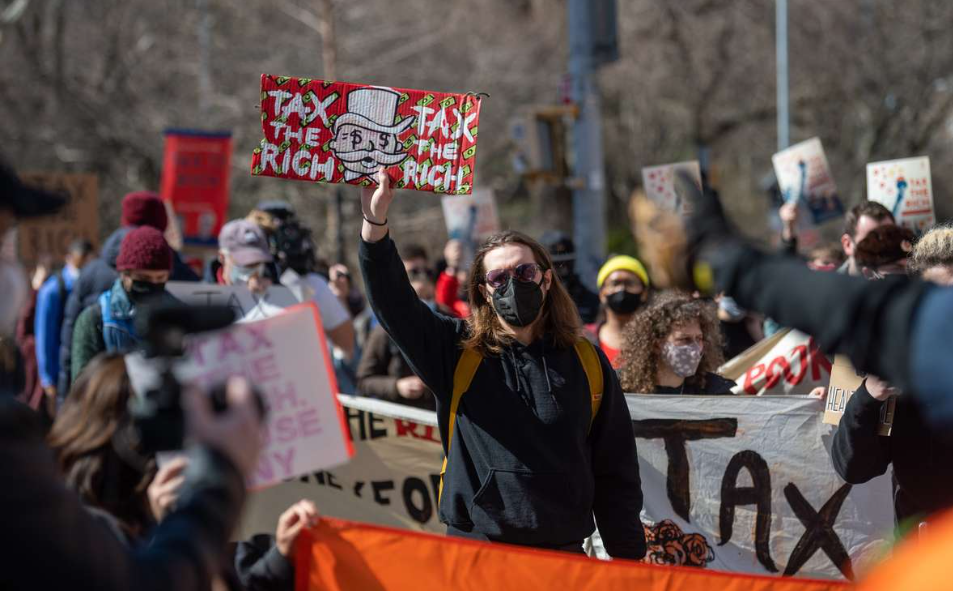
Yet the country’s wealthiest billionaires, with fortunes built on investments and business holdings worth billions, pay only around 24 percent. This shows a clear imbalance, where those with fewer resources are contributing more, proportionally, than those with extreme wealth.
Why the U.S. tax system allows billionaires to pay less than ordinary workers
The imbalance in tax rates is not accidental. It is the result of laws and loopholes that favor the wealthy. Business deductions, special tax shelters, and accounting strategies also reduce what the richest Americans owe. Legislative changes, like the 2017 tax reform, reduced both corporate and personal tax rates in ways that benefited the wealthy far more than the middle class. Billionaires can afford teams of accountants and lawyers to structure their finances in ways that minimize taxes, something ordinary Americans cannot do. As a result, middle-class workers often end up paying a higher share of their income to the government than the ultra-rich.


 Korea Management Federation calls for clear tax standards
  Elon Musk Says Saving for Retirement May Soon Become Irrelevant
  Alibaba’s Amap Launches AI-Powered 3D Virtual Tours for Offline Destinations
  From Swoosh to Local: Nike Loses Ground in China as Domestic Rivals Sprint Ahead
  Philippine Credit Card Startup Zed Raises $16.5 Million in New Funding Round
  Singapore expands money-laundering investigation against Prince Group linked to Chen Zhi