
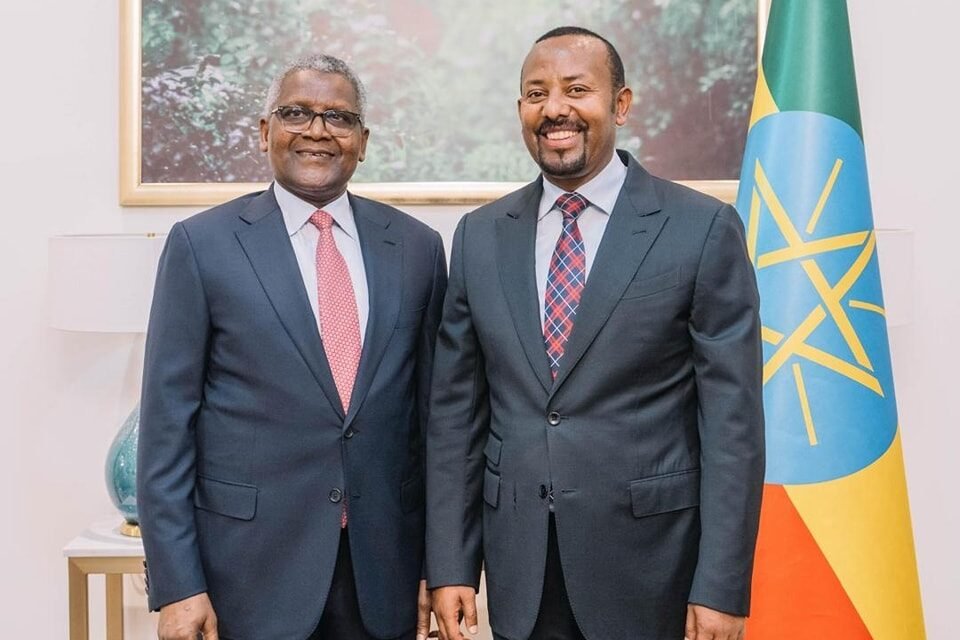
Aliko Dangote, Africa’s richest businessman, has signed a deal to invest $2.5 billion KSh 323 billion in a new fertilizer plant in Gode, Ethiopia. The project is a joint venture between Dangote Group and Ethiopian Investment Holdings, with Dangote owning 60% and the government 40%. This investment is set to transform Ethiopia’s agriculture sector, reduce dependence on imports, and create thousands of jobs for local communities.
Ethiopia’s Need for Local Fertilizer Production
Ethiopia currently imports more than 90% of its fertilizer needs, spending nearly $1 billion annually. Import dependence often leaves farmers vulnerable to global price fluctuations and supply delays. To mitigate these risks, producing fertilizer locally offers a more stable and reliable supply of essential inputs.
With consistent access, farmers can improve crop yields and strengthen food security across the nation. Moreover, this plant will empower farmers to plan more effectively, reduce uncertainty, and ultimately make farming more profitable.
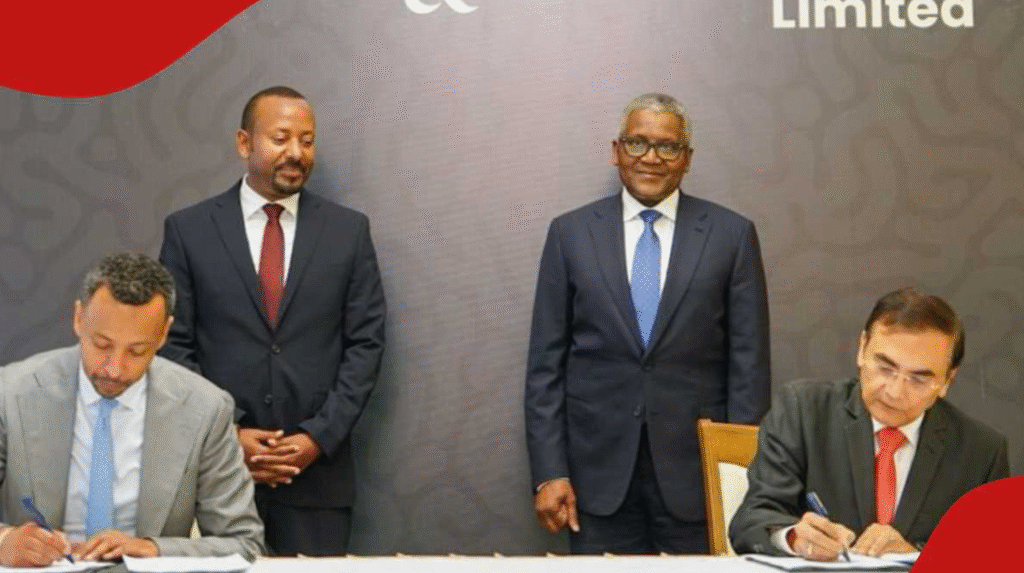
Gode is located in Ethiopia’s Somali region, strategically positioned near major trade routes that connect the country to Djibouti and other neighboring nations. This geographic advantage makes it an ideal site for industrial development.
Creating Jobs and Boosting Local Economy
The fertilizer plant is expected to create thousands of jobs, both directly in Gode and indirectly across the region. In terms of employment, opportunities will span plant operations, transportation, logistics, and administration. Taken together, these developments signal a broader economic ripple effect that could reshape the region’s growth trajectory.
When completed, the Gode facility will produce 3 million metric tons of urea fertilizer annually, making it one of the largest single-site urea plants in Africa. There are also plans to expand production to include other fertilizers like ammonium nitrate and ammonium sulfate.
Supporting Ethiopia’s Agricultural Growth and Food Security
Agriculture is the backbone of Ethiopia’s economy, contributing about one-third of the country’s GDP and employing nearly 70% of the population. By providing affordable, locally produced fertilizer, the plant will help farmers grow more crops, reduce food prices, and improve nutrition.
This project also aligns with the Ethiopian government’s Homegrown Economic Reform II initiative, which encourages industrial development outside the capital and rural areas.
Using local natural gas resources ensures that the fertilizer plant will operate efficiently and cost-effectively. Ethiopia will be able to compete with other major fertilizer-producing countries like Morocco, Russia, and those in the Gulf region. This initiative demonstrates the country’s potential to transform natural resources into industrial products that support economic growth.


