
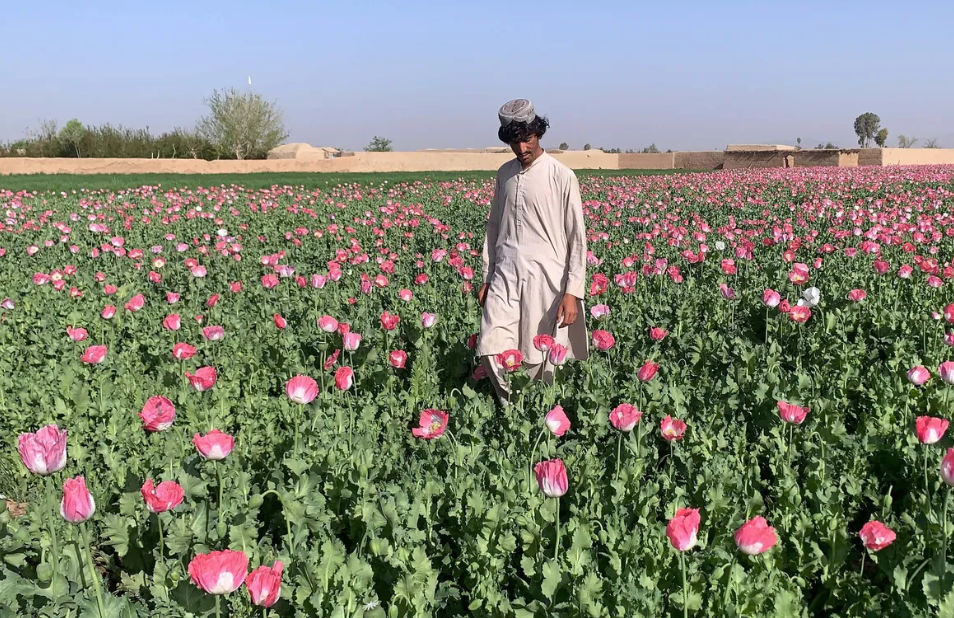
Afghan farmers continue to suffer severe economic hardship three years after the Taliban’s 2022 ban on opium poppy cultivation. A new UNODC survey released on December 30, 2025, highlights that many households in northern provinces have failed to replace lost income, pushing rural communities deeper into poverty.
Persistent Ban and Declining Production
The Taliban enforces the April 2022 decree rigorously. Opium poppy cultivation drops to 10,200 hectares in 2025—one of the lowest levels ever—down 20% from 2024 and a fraction of pre-ban peaks (over 232,000 hectares in 2022). Production falls 32% to 296 tons, with farmers’ income from sales halving to $134 million.
Compliance remains high: 95% of surveyed farmers in Badakhshan and Balkh provinces cite legal restrictions as the reason for stopping cultivation. Dry opium prices decline 27% to $570 per kg but stay five times above pre-ban averages.
Severe Income Losses for Farmers
In northern regions like Badakhshan, Kunduz, and Balkh—where some cultivation persists—85% of households report no or only partial replacement of poppy income. Many switch to wheat and cereals, but yields pale in comparison: $770 per hectare from wheat versus $10,000 from poppy (2023 data).
This gap exacerbates Afghanistan’s humanitarian crisis, with drought, reduced aid, and returning refugees straining resources. Over 40% of farmland lies fallow due to unprofitable alternatives.
Shift to Synthetics and Calls for Support
As opium declines, meanwhile synthetic drugs like methamphetamine surge, with seizures up 50% regionally. Consequently, UNODC urges coordinated international aid for alternative livelihoods—high-value crops (saffron, nuts), irrigation, finance access, and skills training. Moreover, such measures are essential to sustain the ban and therefore prevent relapse. In addition, these interventions not only provide economic stability but also ultimately strengthen community resilience against illicit markets.
This situation underscores the ban’s success in curbing global heroin supply while highlighting urgent needs for farmer support amid Afghanistan’s fragile economy.


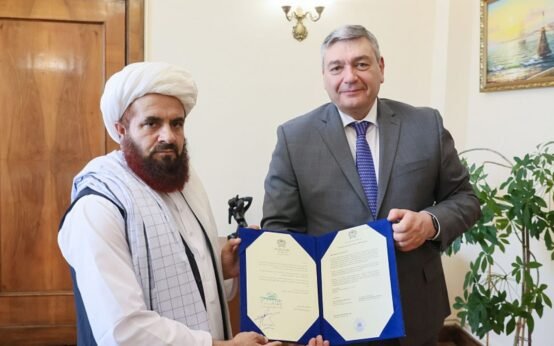 Moscow Officially Backs Taliban Government, a Global First
  Taliban Rejects Western Laws
  Champions Trophy 2025 points table
 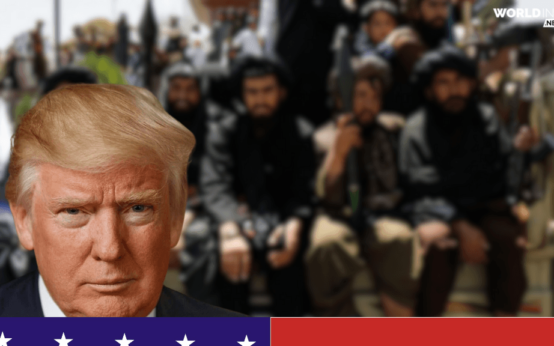 Taliban Rejects Trump’s Demand to Return U.S. Weapons
  India Meets Taliban Officials Has India Recognized the Taliban?