
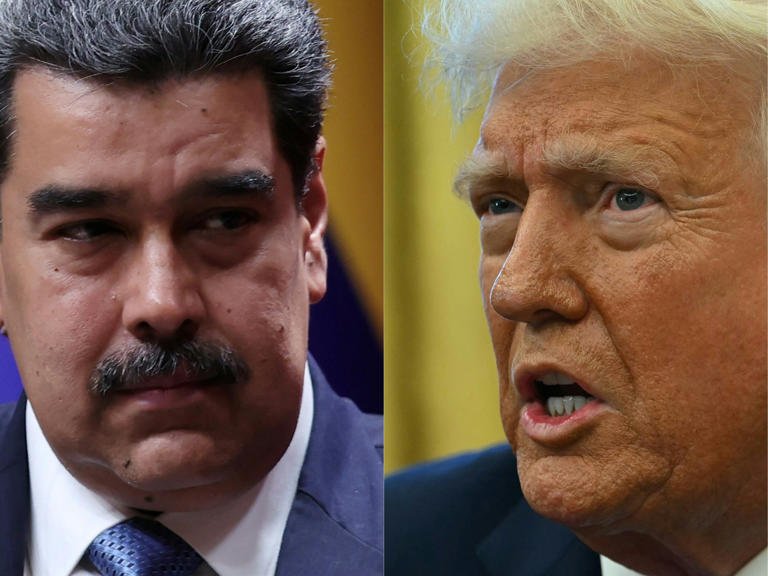
Latin America displays deep divisions in response to the dramatic US military operation on January 3, 2026, that resulted in the capture of Venezuelan President Nicolás Maduro and his wife Cilia Flores. While right-leaning leaders celebrate the removal of a long-criticized authoritarian, left-wing governments condemn it as imperial aggression and a violation of sovereignty, highlighting longstanding ideological rifts in the region.
Support from Right-Leaning Leaders
Argentina’s President Javier Milei, a staunch Trump ally, enthusiastically welcomes the news, proclaiming “FREEDOM MOVES FORWARD. LONG LIVE FREEDOM DAMMIT.” He views Maduro’s ouster as a victory against socialism and a threat to regional stability.
Other conservative voices echo this sentiment, seeing the action as ending a “narco-terrorist” regime responsible for migration crises and instability.
Condemnation from Left-Leaning Governments
Colombia’s President Gustavo Petro strongly denounces the strikes as an “assault on the sovereignty of Venezuela and of Latin America,” warning of a potential humanitarian crisis and deploying forces to the border for refugee preparedness.
Cuba’s President Miguel Díaz-Canel labels it “state terrorism” and calls for international mobilization against the “brutal assault” on the region.
Similar outrage emerges from leaders in Bolivia, Nicaragua, and Honduras, who frame the operation as Yankee imperialism risking chaos across Our America.
Calls for Diplomacy and Restraint
Moderate voices urge caution. Spain offers mediation for a peaceful solution, while some express relief at Maduro’s removal but criticize the unilateral method.
The divide reflects broader polarization: anti-Maduro governments quietly approve or stay silent, while progressive blocs rally in solidarity with Caracas.
This event tests hemispheric unity, with potential for refugee flows, economic ripples, and shifts in alliances.


