

On 6 December 2025, ex-MLA Humayun Kabir recently suspended from Trinamool Congress (TMC) laid the foundation stone for a mosque modelled after the controversial Babri Masjid, in Rejinagar, Murshidabad district.
Hours after the foundation-laying, Kabir publicly announced that he is in talks with AIMIM for a potential alliance ahead of 2026 West Bengal assembly elections. He claimed this alliance aims to challenge both the ruling TMC and the Bharatiya Janata Party (BJP).
Political context why it matters
The mosque project was scheduled on 6 December, the anniversary of the Babri Masjid demolition in 1992 a date loaded with historical communal significance. Many see this timing and symbolism as a direct confrontation to the post-Ayodhya consensus and a strategic move ahead of elections.
The proposed mosque sits in Murshidabad’s Beldanga a constituency with a large minority population, often seen as politically sensitive.
Reaction and volatility
The move caused a sharp reaction: TMC suspended Kabir even before the foundation stone ceremony, calling his remarks and actions “provocative” and a threat to communal harmony.
Opposition parties especially the BJP — denounced the mosque plan as “communal politics,” accusing Kabir of trying to polarize voters. Some state-level leaders even warned of legal and constitutional consequences if the project proceeds.
Meanwhile, supporters of Kabir claim the project is legitimate exercise of religious freedom; Kabir has defended the move as lawful and insisted that neither the Constitution nor the law prevents building new places of worship.
What this signals for West Bengal’s 2026 elections
By aligning with AIMIM and emphasising a cause with strong religious symbolism, Kabir aims to carve out a new political identity possibly consolidating a minority vote base disillusioned with both TMC and BJP.
The mosque project combined with such an alliance could shift electoral equations in regions like Murshidabad, especially given communal polarization and identity-driven politics.
However, the move carries high risk: it might provoke backlash, communal tension, or state-level crackdown. The heavy security around the site shows authorities are already treating the matter as a flashpoint.


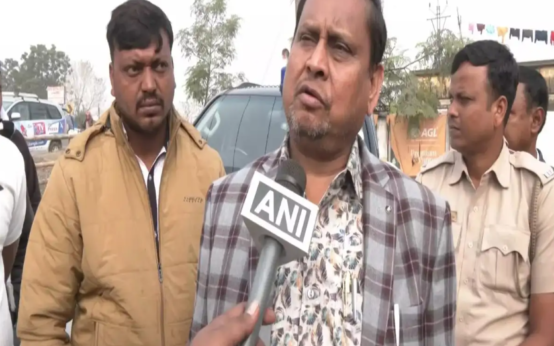 Suspended TMC MLA Humayun Kabir Launches Janata Unnayan Party, Vows to Defeat Mamata Banerjee