
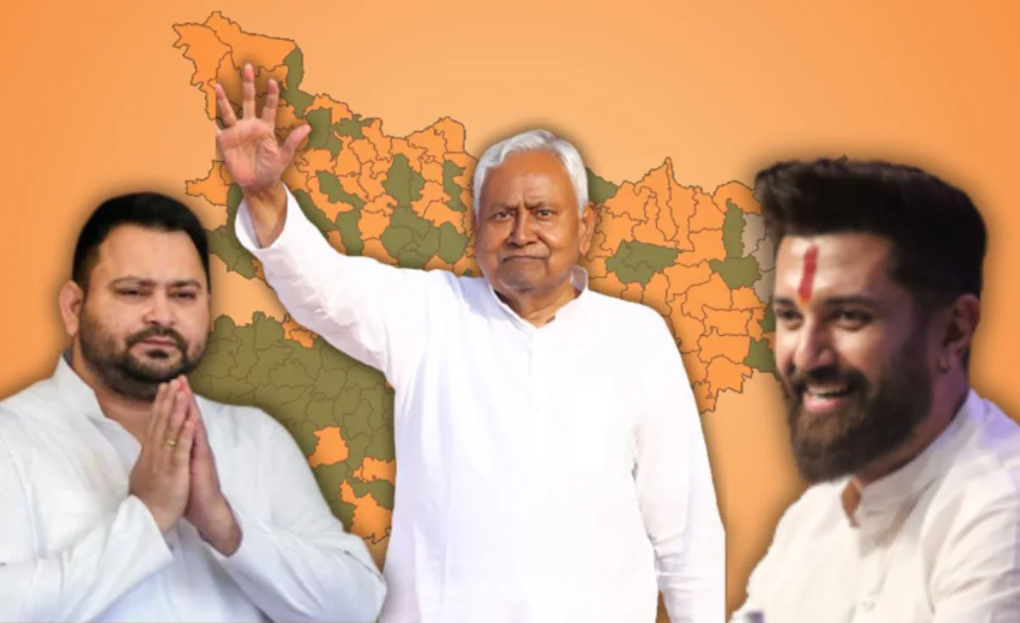
The 2025 Bihar Assembly election results have delivered a paradox for Tejashwi Yadav’s Rashtriya Janata Dal RJD. Despite securing a higher vote share than the BJP and JDU, the party has ended up with significantly fewer seats. This unexpected outcome has triggered introspection within the Mahagathbandhan and raised larger questions about strategy, seat distribution, and the political mood across Bihar.
Higher Vote Share, Lower Seat Tally
According to the official results, the RJD polled more votes than the BJP and Chief Minister Nitish Kumar’s JD(U). However, due to the first-past-the-post (FPTP) system, the distribution of votes across constituencies played a decisive role.
Much of the RJD’s support appeared to be concentrated in a limited number of seats, leading to big victories in some constituencies but narrow losses in many others.

This trend resulted in the NDA capturing a strong majority while the Mahagathbandhan struggled to convert its vote count into actual seat wins.
National Parties Capitalise on Wider Spread
The BJP and JD(U) benefitted from a more evenly spread voter base. Their votes translated more efficiently into seats, helping the NDA secure a defining win. Analysts noted that even small shifts in the NDA’s favour in certain regions created a ripple effect that improved their constituency-level performance.
The RJD’s inability to break into several urban and semi-urban pockets was also seen as a major factor.
Tejashwi Yadav, the results are both encouraging and disappointing.
On one hand, the rising vote share indicates strong popularity among young voters and traditional support bases. On the other, the inability to translate votes into seats highlights strategic weaknesses, such as candidate selection and alliance coordination.


 Democratic Party appoints Lee to prosecution response committee
 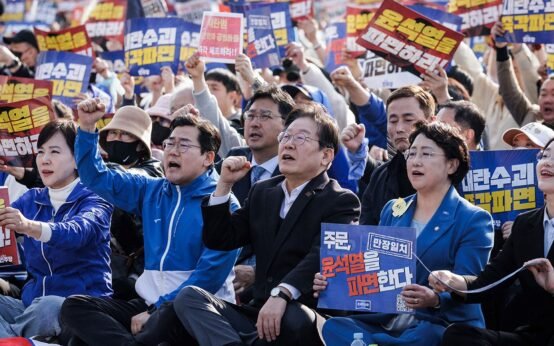 Prosecution’s Partial Appeal Sparks Political Divide in South Korea
 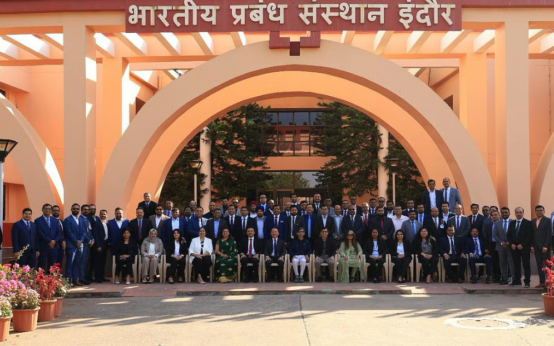 IIM Indore’s 2019 Proposal: Training Program for Politicians, Bureaucrats, and Businessmen
 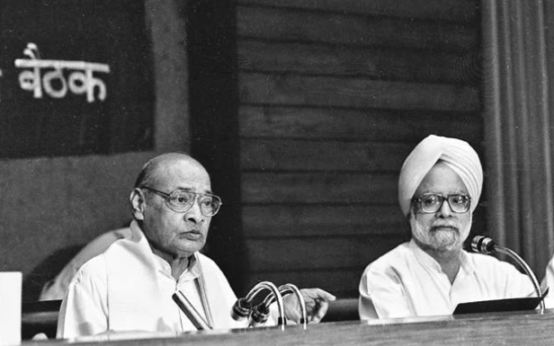 India Today@50 Episode 3: Pokhran Nuclear Tests, Globalization, Coalition Politics, and Kargil War
  Trump Travelled on at Least 8 Epstein Flights, Over 11,000 New Files Released
  New Tamil Nadu Party Defends Secular Stand, Calls Political Controversy a ‘Staged Drama’