
China’s growing determination to dominate the artificial intelligence hardware race, the Chinese government has prioritized Huawei in the distribution of advanced AI chips. This decision highlights Beijing’s strategic push to strengthen domestic technological independence amid intensifying global trade restrictions.
Beijing’s Strategic Move to Strengthen Huawei’s AI Capabilities
According to reports, Huawei will receive priority access to key AI chips developed within China, enabling the company to boost its AI infrastructure and maintain momentum despite U.S. sanctions. This allocation is part of China’s broader national strategy to reduce dependence on foreign semiconductor technologies and build a self-sufficient AI ecosystem.
Government officials see Huawei as a central player in this mission, citing the company’s rapid progress in chip design, cloud computing, and machine learning applications.Consequently, Huawei’s recent advancements in its Ascend AI processors have already positioned the company as a major domestic competitor to global tech giants.
Trade Restrictions Push China Toward Homegrown Innovation
The Chinese government’s decision comes amid continuing U.S. export controls that limit China’s access to cutting-edge AI hardware from companies like Nvidia and AMD. These restrictions have accelerated Beijing’s efforts to localize semiconductor development, particularly for industries such as defense, telecommunications, and autonomous technology.
Experts believe the prioritization of Huawei will not only bolster China’s AI ambitions but also reshape the balance of power in global tech supply chains. “Beijing’s focus on Huawei marks a turning point in how China intends to secure its technological future,” one analyst noted.
Global Implications of Huawei’s Growing Role in AI Development
This development has sparked international attention, with analysts predicting potential trade tensions as Huawei expands its influence. The company’s leadership in AI chip production could redefine standards for AI-driven computing and automation, particularly across Asia, Africa, and the Middle East—regions where Huawei already maintains a strong technological presence.
While the move reinforces national confidence, it also raises concerns among Western nations about the geopolitical impact of China’s rapid AI advancements. As Huawei strengthens its foothold in AI chip development, the global technology landscape is poised for a new era of competition.


 Stanford computer science classes emphasize AI communication over coding
  International Monetary Fund warns 40% of jobs face AI impact
 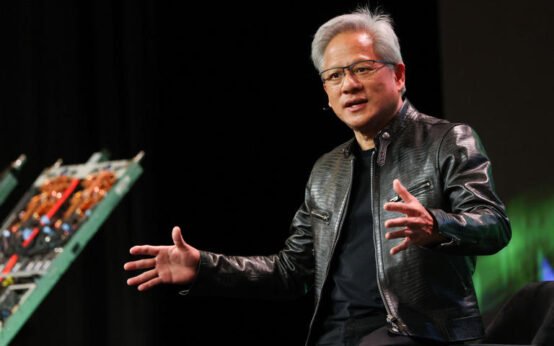 NVIDIA CEO Jensen Huang Criticizes AI Doomsaying as Harmful to Industry and Society
  MindRank Advances China’s First AI-Assisted Drug to Phase 3 Trials, Slashes R&D Costs by 60%
  Yann LeCun’s AI Startup Valued at 5 Trillion Won Ahead of Official Launch
  US Agency Names Moonshot AI as Top Chinese Artificial Intelligence Model