
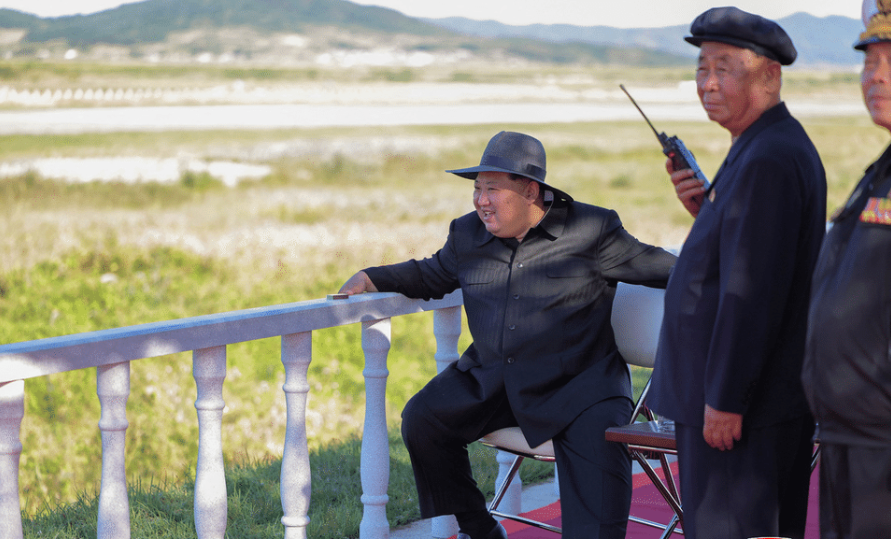
North Korean state media reports that leader Kim Jong Un recently observed tests of unmanned aerial vehicles that resemble the U.S. Global Hawk surveillance drone. Officials say the tests included both reconnaissance and attack drones. Kim ordered that these drones’ capabilities be improved, especially using artificial intelligence . These developments highlight North Korea’s continued effort to modernize its military and expand its unmanned systems.
What exactly was tested reconnaissance and tactical UAVs
According to state media, the tests involved both strategic reconnaissance aircraft able to survey large areas from high altitude and tactical attack drones for smaller, more direct missions. The reconnaissance drone resembles the U.S. RQ-4 Global Hawk, a high-altitude, long-endurance drone used for intelligence gathering. Observers say North Korea is trying to build similar systems to monitor borders, detect enemy movement, or gather data from the air over large distances.
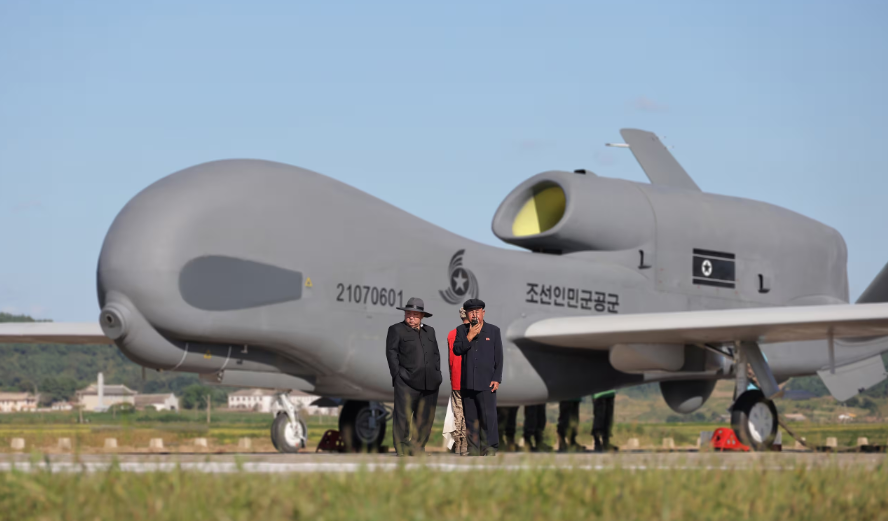
Kim Jong Un expressed satisfaction with the test results and called on military scientists to integrate more artificial intelligence into drone operations. He wants better autonomy, improved targeting, faster data processing, and more robust decision-making onboard the drones themselves.
Why North Korea sees Global Hawk-style drones as a priority
Having long-range reconnaissance UAVs gives North Korea several military advantages. These capabilities matter especially given North Korea’s geography and security challenges: mountainous terrain, border disputes, and tensions with neighboring states.
Reconnaissance drones can serve early warning, intelligence gathering, and even help guide other military operations.
By making these tests public, North Korea sends multiple signals. First, it signals to its citizens and military that it is keeping up with military modernization.
Third, it seeks to influence diplomatic leverage. Demonstrating technical progress may encourage foreign actors to take North Korea more seriously in negotiations, sanctions discussions, or security talks.
Challenges and limitations North Korea may face in drone development
North Korea likely faces significant challenges in making Global Hawk-like drones operational. High altitude, long-range UAVs require advanced materials, reliable engines, sensors, navigation, data links, and stealth or resistance to countermeasures all difficult to achieve.
Developing AI capabilities and integrating them safely into military systems also demands sophisticated software, testing, and validation. Constraints like sanctions, limited supply of foreign high-end components, and the difficulty of rigorous testing under real conditions may slow progress.
These developments will likely heighten concern among South Korea, Japan, and the U.S. Reconnaissance drones with better endurance can pose surveillance threats, increase border tension, or tip balances in intelligence gathering. Neighbors might respond by boosting their own drone defenses, seeking improved anti-UAV technologies, or tightening surveillance and airspace monitoring.


 Gulf states lobby US against Iran military strike
  US to host officials from Denmark and Greenland as Trump renews takeover threats
  Canadians aren’t relenting: US travel boycott holds strong
  Could Kim Jong un’s sister, Kim Yo Jong, become the next leader of North Korea?
  Kim Jong Un’s Rewards for Backing Russia in Ukraine War
  India Wary as US Backs Pakistan With F-16 Upgrades and Mineral Projects