
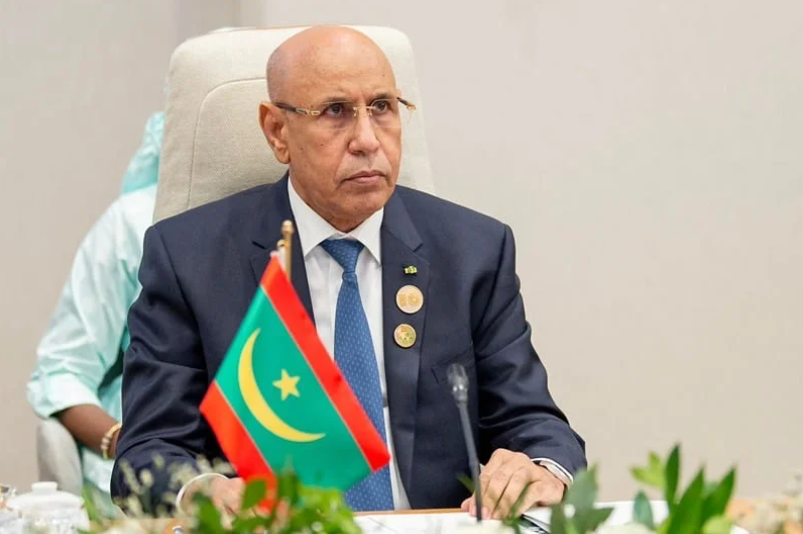
Intra-African Trade Fair held in Algiers from September 4-10, Algeria’s President Abdelmadjid Tebboune suggested Mauritania’s President Mohamed Ould Cheikh El Ghazouani meet with Brahim Ghali, leader of the Polisario Front, on the sidelines of the fair. Algeria framed the meeting as a chance to “open a new chapter” in relations. El Ghazouani declined the offer. Observers noted that at the fair’s opening, he avoided greeting, speaking with, or even posing with Ghali for a photo.
Historical Strains in Mauritania-Polisario Relations Contextualize the Refusal
The refusal stems from several earlier tensions. Not long before the IATF, Mauritania closed its Lebriga border area to Polisario forces, preventing them from entering Mauritanian territory for attacks against Morocco. That decision came under pressure from security concerns and diplomatic balancing. Algeria later facilitated a Polisario delegation led by Hamma Salama to persuade Mauritania to reverse that decision, but the Mauritanian authorities held firm.
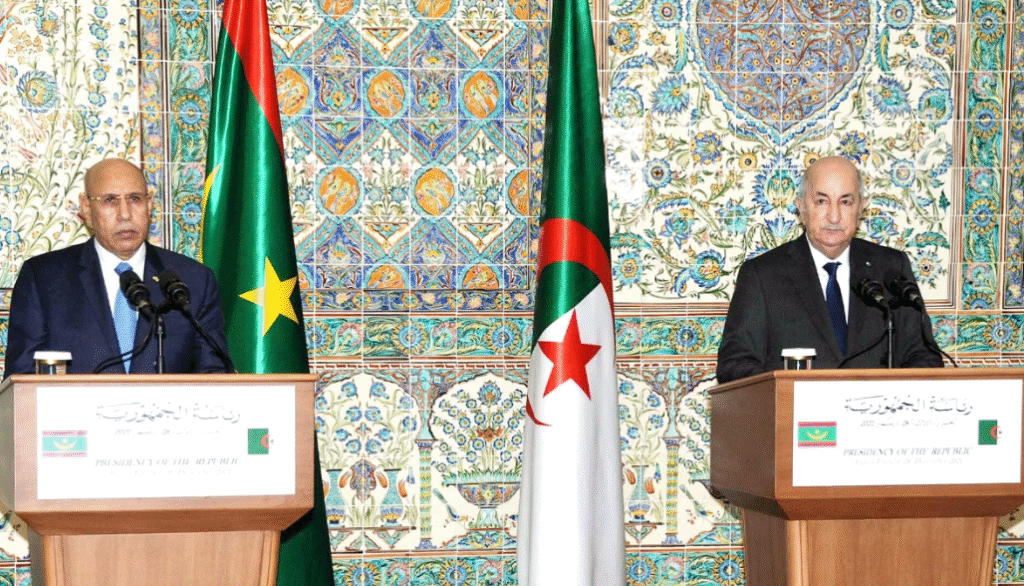
Mauritania also hosted a Polisario delegation in May, at Algeria’s urging, but the visit did not lead to any lasting change. Similarly, Brahim Ghali attended El Ghazouani’s re-inauguration in August 2024 on Algeria’s suggestion, though political distance remained between Nouakchott and the Polisario in practice.
Why Mauritania Refuses: Sovereignty, Border Security, and Regional Diplomacy
Mauritania’s refusal to meet Ghali reflects a mix of strategic, political, and security calculations. President El Ghazouani remains sensitive to national sovereignty and wary that engaging too closely with the Polisario could draw Mauritania deeper into the Western Sahara dispute—a territory claimed by Morocco and claimed by the Polisario Front.
Security concerns also play a role. By restricting access to Lebriga, Mauritania signaled that it will not allow its territory to be used for military operations or incursions. This control over its borders is a priority for Nouakchott, especially given regional instability and fears of spillover effects.
Diplomatically, Mauritania has tried to maintain a balance between its relationships with Algeria, Morocco, and other regional powers. Accepting Algeria’s offer to meet Ghali at IATF risked upsetting that balance, particularly since Morocco sees Ghali and the Polisario as adversarial in the sovereignty conflict over Western Sahara.
Algerian Push for Engagement Meets Mauritania’s Hesitation
Algeria has repeatedly pushed to normalize diplomatic engagement between Mauritania and the Polisario leadership. The IATF offer followed earlier efforts by President Tebboune to mediate and persuade El Ghazouani to host Polisario delegations. Algeria likely views such meetings as diplomatic leverage in promoting its own position in the Western Sahara dispute.
Yet Mauritania’s responses have shown hesitation. Even when Ghali attended the swearing-in ceremony and other events by invitation, El Ghazouani has avoided substantive engagements. The repeated declines signal that while Mauritania may tolerate certain symbolic interactions, it won’t commit to strong alignment with either side in a way that might compromise its foreign policy objectives or national security.


