
Nepal has taken the bold step of banning Facebook and several other major social media platforms after a long standoff over regulatory compliance. The government announced that these platforms repeatedly ignored directives to set up local offices, appoint country representatives, and follow the newly enforced National Cybersecurity and Social Media Guidelines 2025.
Government Pushes for Greater Accountability
Officials in Kathmandu argue that global tech giants operate freely in Nepal without being accountable to local laws. The Ministry of Communication and Information Technology stated that the ban aims to protect citizens from harmful content, misinformation, and unregulated digital practices. Authorities also claim that despite multiple warnings, platforms like Facebook, Instagram, and X (formerly Twitter) failed to address concerns about content moderation and data transparency.

By taking this step, Nepal has joined a growing list of countries that demand tighter control over big tech, following India’s new IT rules and similar moves in Indonesia and Nigeria.
Impact on Businesses and Daily Life
The ban has caused widespread disruption across Nepal. Small businesses, digital marketers, and influencers who rely heavily on Facebook and Instagram for sales and promotion suddenly find themselves without a platform. Students and professionals, too, say the restrictions have created hurdles in education, networking, and communication.
E-commerce firms that depend on Facebook Marketplace report sharp declines in customer engagement since the ban went into effect. Many small entrepreneurs are now turning to domestic platforms or shifting to messaging apps like WhatsApp and Viber to keep their businesses alive.
Public Reaction Reflects Anger and Confusion
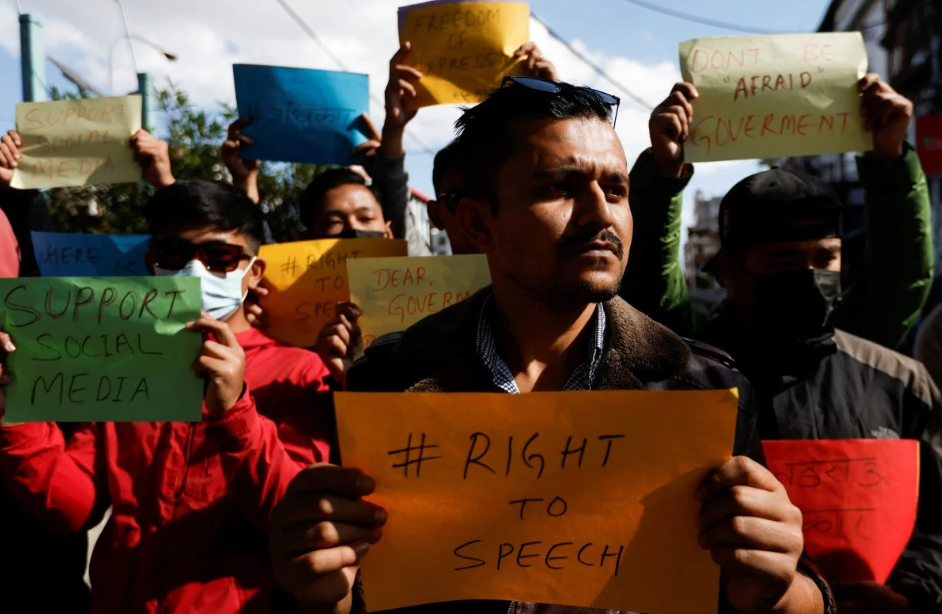
Citizens have reacted with mixed emotions. Many express anger on alternative apps, accusing the government of overreach and comparing the move to digital censorship. Protesters gathered outside the Ministry offices in Kathmandu, arguing that restricting social media violates fundamental rights to free speech.
Others, however, support the ban, saying tech companies cannot enjoy free access to Nepal’s digital space while refusing to respect its laws. Civil society groups have urged the government to negotiate with the platforms rather than impose blanket bans.
So far, Facebook’s parent company, Meta, has not released an official statement addressing the Nepal ban. Industry insiders suggest that negotiations may still take place behind closed doors, as Nepal represents a fast-growing market for social media users.
Analysts say Meta and other companies risk losing trust in emerging markets if they continue to resist local regulations. Governments in South Asia increasingly demand compliance with national laws, and companies that fail to adapt may face stricter restrictions in the future.
What Lies Ahead for Nepal’s Digital Future
The ban raises critical questions about Nepal’s digital future. Supporters of the decision argue it will encourage the growth of local social networking platforms, while critics warn it could isolate Nepal from the global digital economy.
Legal experts believe the standoff could end if tech firms agree to register local offices and share data when necessary. Until then, millions of Nepalese remain cut off from the platforms that dominate digital communication worldwide.
Nepal’s ban marks a turning point in its digital policy either paving the way for stronger digital sovereignty or sparking long-term frustration among citizens and businesses who rely on global social media networks.


 Birth Registration Denial in Nepal Puts Children’s Future at Risk
  Nepal Digital Banking Push Faces After Central Bank Closure
  Why Nepal Needs an Electric Vehicle Revolution
  USAID closure harms pro-democracy development efforts in Nepal
  Why Nepal’s MaPaSe Drink-Driving Tests Called Unscientific
  Teachers’ Demands Cannot Be Addressed in Budget Session