

Thailand and China have renewed their bilateral currency swap agreement, a step that highlights the deepening financial cooperation between the two countries. The deal, signed between the Bank of Thailand and the People’s Bank of China, allows both nations to exchange their local currencies directly the Thai baht and the Chinese yuan without relying on the U.S. dollar as an intermediary.
Can Both Take Benefits from Trade and Investment?
Currency swap agreements are designed to encourage local currency use in cross-border trade. For Thailand, the deal helps its exporters and importers trade more easily with Chinese counterparts. For China, it expands the international use of the yuan, which Beijing is keen to promote as a global currency.

The renewed agreement reflects the growing partnership between Bangkok and Beijing. Both nations are important trade partners, with China being Thailand’s largest trading partner for more than a decade. By continuing this swap deal, businesses in both countries can reduce foreign exchange costs, settle transactions more smoothly, and lower dependence on global market fluctuations tied to the U.S. dollar.
The arrangement will also support regional stability at a time when global currencies remain under pressure due to geopolitical tensions and economic uncertainties.
Regional impact of Thailand-China financial cooperation on Asian economies
The renewal is not an isolated development. Many Asian economies, including Malaysia, Indonesia, and Singapore, have also signed swap agreements with China in recent years. These efforts are part of Beijing’s broader push to strengthen regional economic networks and reduce dependency on Western financial systems.
The renewal is not an isolated development. Many Asian economies, including Malaysia, Indonesia, and Singapore, have also signed swap agreements with China in recent years. These efforts are part of Beijing’s broader push to strengthen regional economic networks and reduce dependency on Western financial systems.
For Thailand, the deal also aligns with its goal of diversifying its economic partnerships and ensuring currency stability, especially as global markets remain volatile.
For Thailand, the deal also aligns with its goal of diversifying its economic partnerships and ensuring currency stability, especially as global markets remain volatile.


 Mercedes-Benz to accelerate localisation as China revenue slump hits 2025 profits
 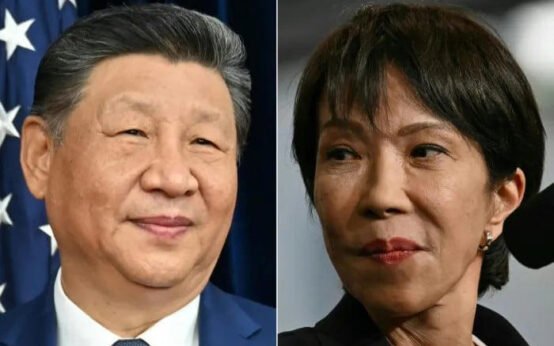 China Bans Dual-Use Exports Including Rare Earths to Japan Over Taiwan Remarks
  China’s DeepSeek Upgrades Chatbot with Advanced ‘Interleaved Thinking’ Feature Amid Next Model Buzz
  North Korea Fires Ballistic Missiles Hours Before South Korean President’s China Visit
  MindRank Advances China’s First AI-Assisted Drug to Phase 3 Trials, Slashes R&D Costs by 60%
  China Enforces 50% Domestic Equipment Rule for Semiconductor Expansion